Commercial Roof Asset Management in Miami Gardens, FL
Roofing Capabilities
Build a roof-area record for Miami Gardens properties with condition findings, repair priorities, access notes, and capital follow-up for each asset.
Commercial Roof Asset Management Overview
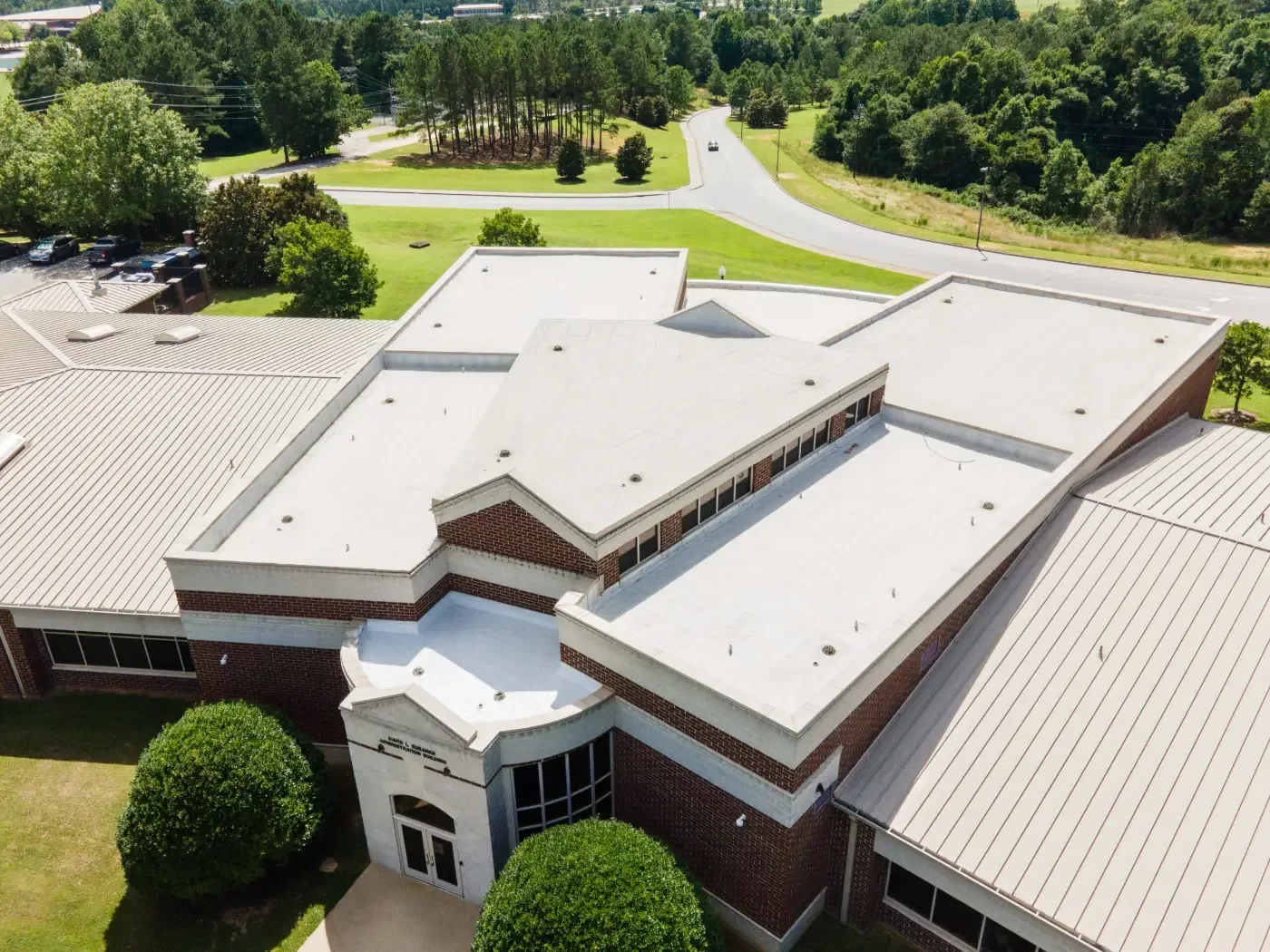
Portfolio work starts by separating one roof area from the next. For a general contractor or property team in Miami Gardens, FL, we match each building record to field evidence, open repair candidates, operating limits, and the person who can approve a work package. A roof-area record should tell the next reader what was observed, where it sits, and what decision remains. It should not turn a regional weather pattern or a neighbor's building use into a claim about a particular roof.
We inspect low-slope and metal systems, photograph details by area, and note access and staging limits. The National Weather Service places 60 to 70 percent of average annual South Florida rainfall between May 15 and October 15, a seasonal pattern we use when planning roof openings and temporary protection. That context does not set a condition rating. Each roof still needs its own membrane, flashing, drainage, and moisture review. A commercial roof inspection supplies the field baseline for that record.
Which details belong in the asset register?
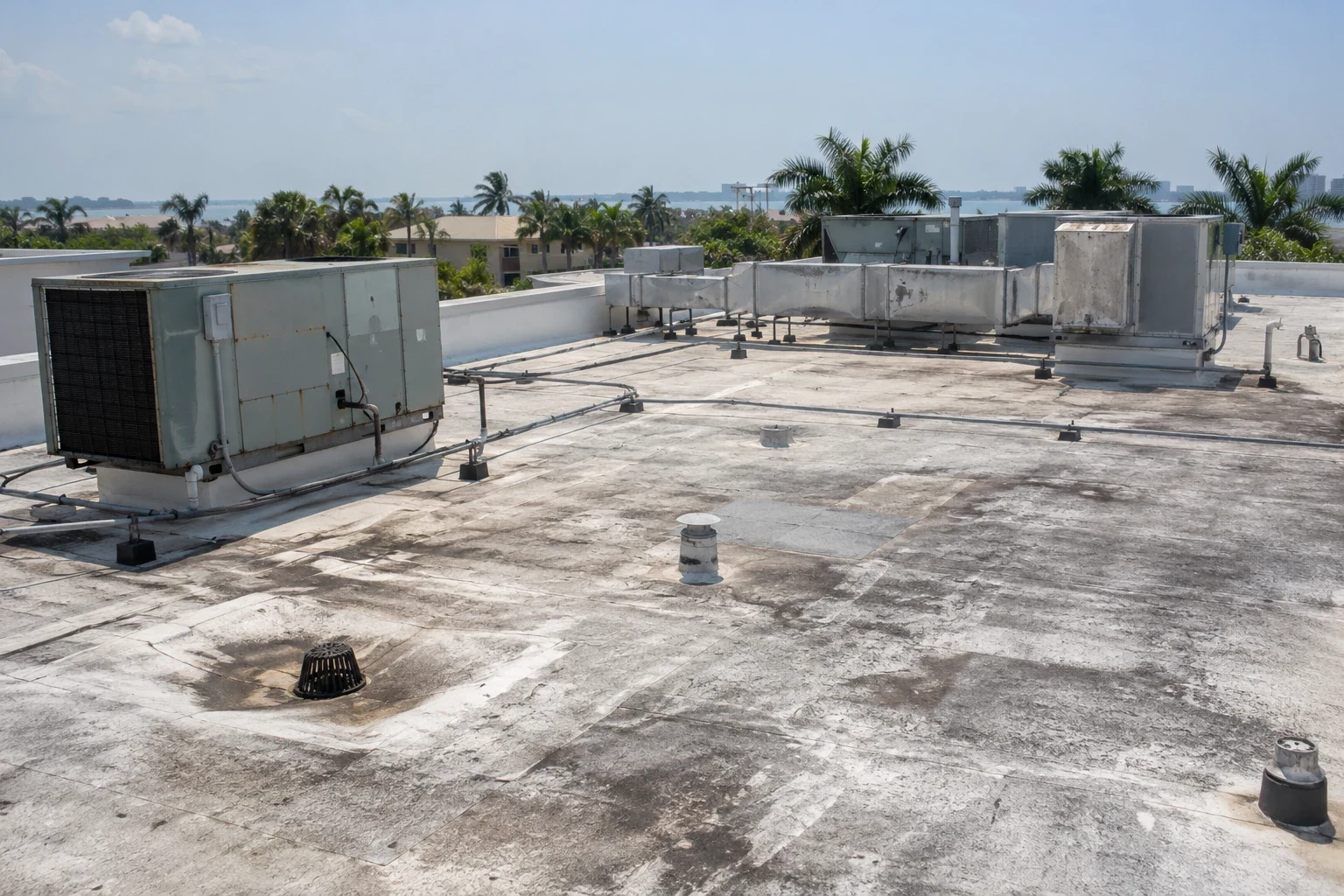
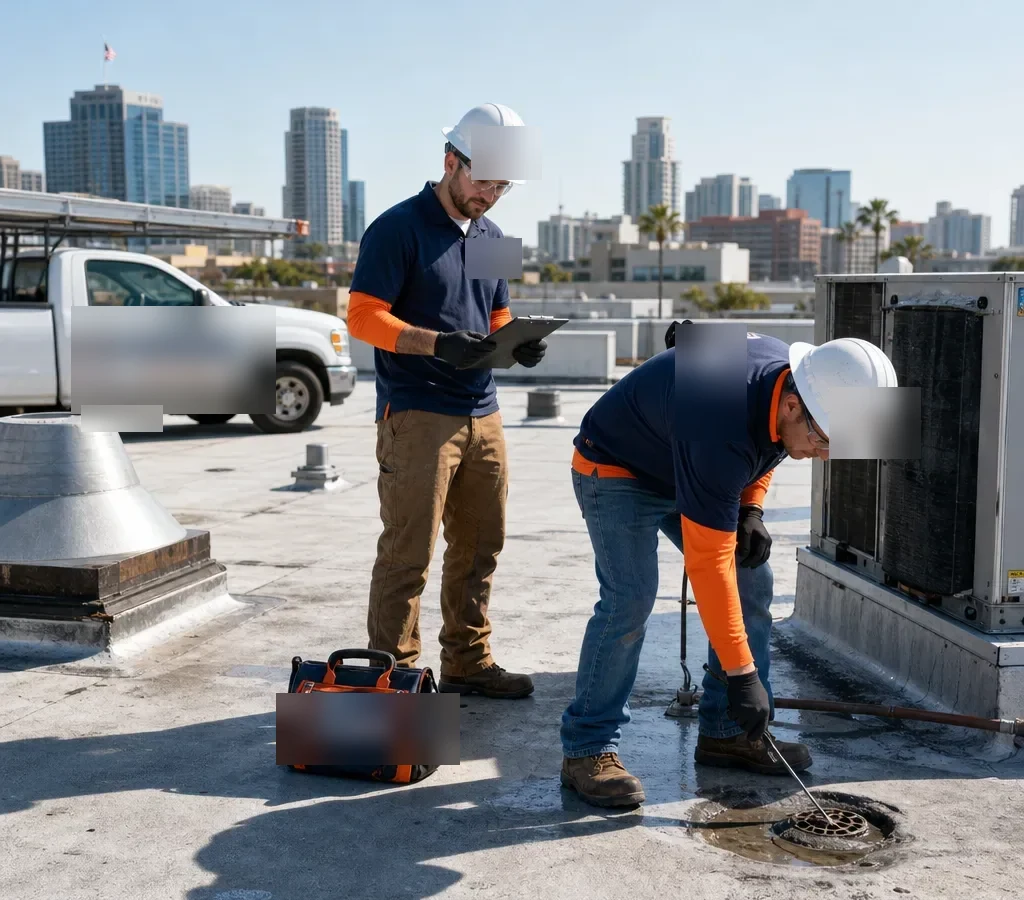
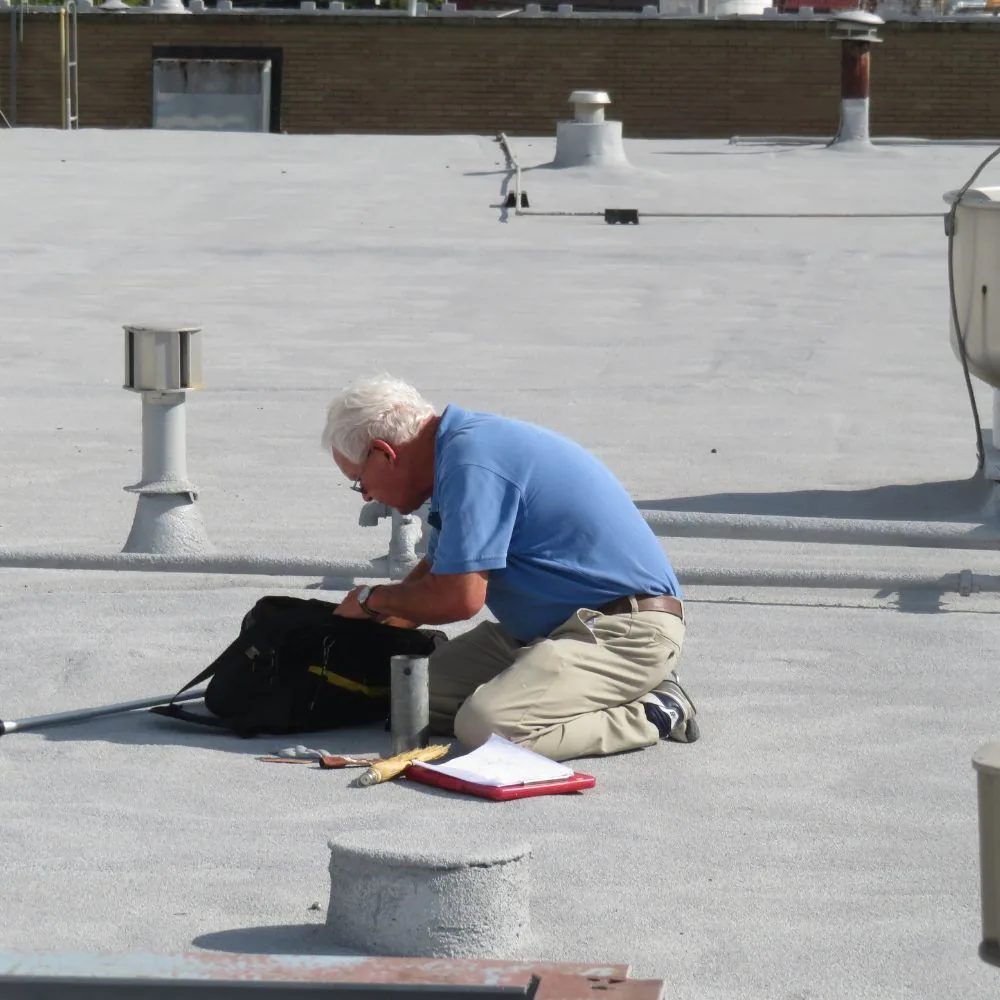
We begin with the building identifier supplied by the owner, roof zones, system where visible, approximate area if measured, and known work history. Photos show the condition and its location, while notes distinguish observed defects from items that need testing or owner confirmation. A seam opening, drain restriction, curb transition, or wet insulation indication becomes a separate entry rather than a broad label for the entire roof. The reader can then compare findings without treating unlike assemblies as equivalent.
The record also tracks when the observation was made, whether the surface was dry, and what access was available. If equipment blocks a drain or a tenant area cannot be entered, that limitation stays beside the affected zone. A later visit can then answer the same question with better access instead of repeating the inspection without context. We note completed repairs and attach the closeout photo to the original item, preserving the chain from finding to action. Record each leak report with its onset, interior location, roof zone, and any temporary protection already applied. When another report arrives, those details help the asset manager distinguish a repeat at the same transition from a separate problem before expanding the work package.
In Miami Gardens, furniture-related businesses cluster by the Palmetto Expressway, while U.S. 441 carries automobile commerce. Those commercial settings can call for different access windows, loading routes, and occupied-area controls, but they do not tell us what an individual building has on its roof. We capture those site limits beside the roof-area record. When several buildings are involved, a condition report with mapped photos keeps the evidence tied to each structure.
More on Commercial Roof Asset Management
The sections below cover the questions property teams ask before they approve the work.
How do findings become a useful sequence?
Each item receives a practical next step: monitor, investigate, repair, or develop into a replacement scope. We note the reason for that choice, the area affected, the access needed, and any approval point that could hold the work. An isolated puncture in an otherwise serviceable field may remain a repair candidate. Broad seam distress, recurring moisture, or deteriorated insulation can call for a larger review, but the record should say what evidence supports that scope. We compare repair frequency with the condition and access record, rather than letting a single entry decide a portfolio-wide priority.
The National Weather Service links wet-season humidity and heat with near-daily showers and thunderstorms across South Florida. Managers use that regional pattern to plan inspection timing, safe access, and protection when a roof opening is planned. It does not establish concealed moisture or forecast a specific leak. We document the actual observation and arrange testing where needed. A moisture survey can help locate areas for closer evaluation, while drainage and ponding-water work is scoped to observed slopes, drains, and flow paths.
Can two properties be compared fairly?
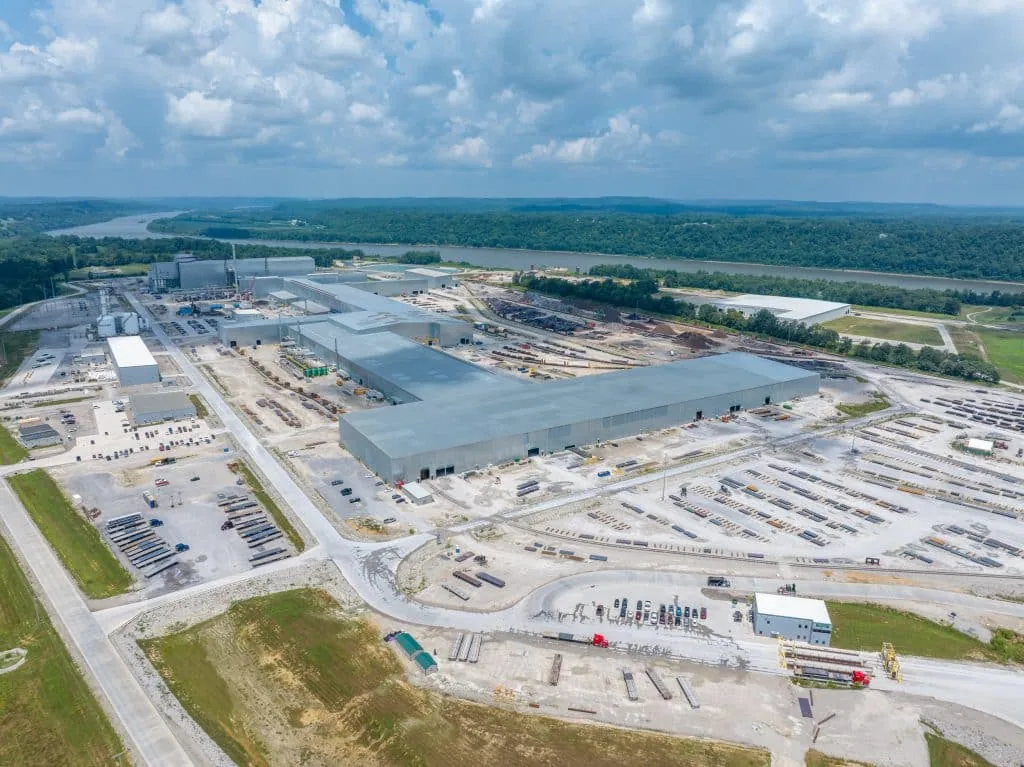
Yes, when the same fields are recorded without flattening the differences. A portfolio comparison can group repair candidates, access limits, recurring details, and near-term approvals, while keeping each building's photos and conditions separate. We identify the roof system where visible and record uncertainty where it is not. That gives the asset manager a consistent view of the work without implying that a membrane or remaining service life is identical across the group.
Hialeah's economic profile identifies manufacturing, retail, and restaurants as major parts of the city economy, and West 49th Street as a commercial area. Those settings make it useful to capture delivery activity, customer access, and operational hours in each site plan. The multi-site program can coordinate inspections and approvals across buildings; a maintenance plan can track recurring observations and completed repairs. Neither record replaces roof-specific field evidence.
Industries We Work With
Owners and operators in these fields rely on us to plan roof work around their buildings.
Coordinate healthcare roof work in Miami Gardens, FL around patient routes, critical rooms, equipment, infection controls, and documented approval windows.
Coordinate 3PL roof work in Miami Gardens, FL around dispatch cycles, dock access, inventory protection, equipment routes, and phased closeout.
Plan school district roof work in Miami Gardens, FL around student routes, athletic spaces, summer windows, classroom protection, and board approvals.
Coordinate portfolio roof work in Miami Gardens, FL with area records, access windows, repair priorities, and approvals that keep each asset distinct.
Related Roofing Work
Other pages that cover the same roof question.
Roof leaking now? Call 555-555-5555 and we will send a crew to look at it.
What should trigger a capital review?
We flag repeated repair entries, expanding wet areas, recurring leaks at the same detail, and work whose access or staging requirements are becoming difficult to coordinate. These are signals for a scoped review, not automatic replacement rules. The record compares the affected roof areas, prior actions, and the owner’s preferred timing. If replacement is being considered, we separate the repairable sections from the proposed replacement boundary and identify penetrations, edge conditions, drainage, and rooftop equipment that belong in the next package.
Access around Miami Gardens draws on the I-95 and SR 826 road corridors, Florida’s Turnpike, the Florida East Coast Railway, and Tri-Rail passenger service. For roofing work, route and delivery planning still has to be confirmed for the property itself. We record the intended arrival window, material drop, lift path, and daily closure point beside the work package. When the schedule requires phased work in an occupied building, an occupied-building sequence can preserve the operating limits in the scope.
Where does the approval point sit?
The record is useful when it makes the next authorization plain. We identify the decision maker, the question to resolve, and the evidence required before work proceeds. That might be approval for a selective opening, a repair allowance, an access window, or a replacement boundary. Urgent calls can receive temporary protection outside standard business hours; permanent corrective work is defined after safe access and a field review. Approval history matters because a deferred test or access restriction can change the next recommendation. We keep that follow-up item visible instead of closing it as a completed repair.
Share roof plans, prior repair records, occupancy limits, and the access window you can provide. We can map the portfolio by roof area, review each building in the field, and return a work sequence with approval points and follow-up items. For properties in Miami Gardens and Hialeah, the record begins with the specific site and remains tied to its actual assembly, condition, and operating needs.
Set the next roof-area review
Share the roof plans, occupancy limits, access windows, prior repair records, and project schedule. We will organize the field review by building, document each finding, and identify the approval points for the next work package.
Questions About Commercial Roof Asset Management
What information should we send before a portfolio review?
Send the roof plans you have, building identifiers, prior repair records, occupancy constraints, and any known access windows. We compare those materials with field observations and note where drawings or history need confirmation.
Does one condition score work for every roof?
A shared rating scale helps compare urgency, but each roof area keeps its own assembly, photos, and repair history. We record uncertainty and testing needs instead of assigning the same condition to buildings with different evidence.
When should a repair record move into capital planning?
Repeated defects, expanding moisture indications, and growing repair scope can prompt a capital review. We identify the affected areas and compare repair, restoration, and replacement boundaries before the owner selects a work package.
Can you keep tenant operations in the asset record?
Yes. We note occupied areas, delivery or loading restrictions, noise limits, and approved work windows with the relevant roof zones. The field team can then plan staging and daily closure around the building's actual schedule.