
Commercial Roof Repair in Miami Gardens, FL
Commercial Roofing Services
Resolve commercial roof failures in Miami Gardens, FL with area-by-area findings, repair scopes, access coordination, and follow-up records for owners.
Commercial Roof Repair Overview
A repair package begins with the failed detail and the roof area that surrounds it. In Miami Gardens, FL, we inspect seams, flashing, membrane cuts, drains, and equipment supports, then record what needs attention now and what should be watched. A retailer near the Palmetto Expressway and an automobile business on U.S. 441 may have different access windows, but the repair scope still comes from the roof itself. The general contractor receives a clear work package and approval point.
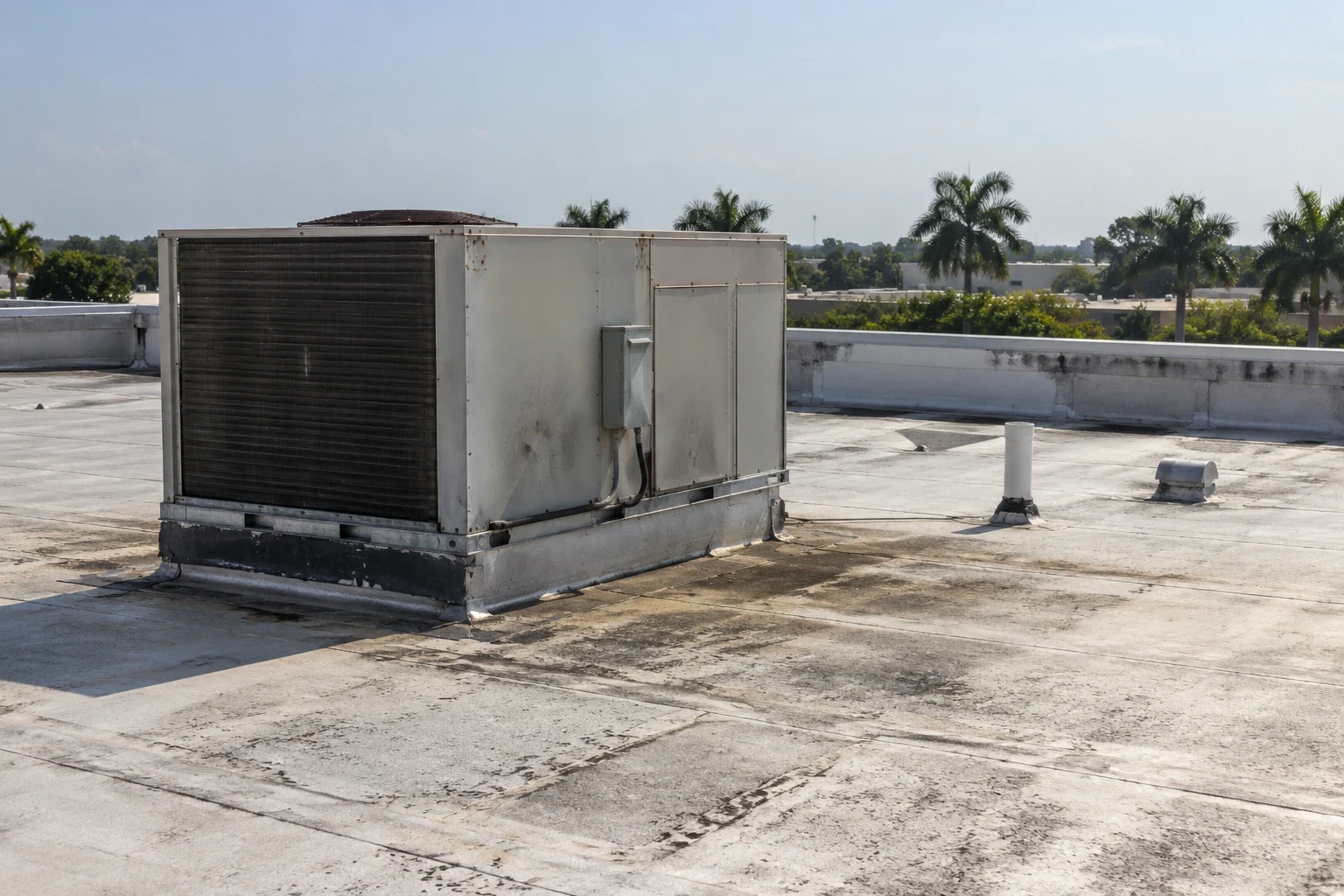
Which defect is driving the repair?
A visible split may be only one part of the failure. We check nearby seams, wall transitions, fasteners, penetrations, and drainage to find related defects before assigning the repair boundary. The inspection record notes the material, approximate area, moisture evidence, and any condition that needs a follow-up opening. That gives the owner a repair candidate tied to the roof area instead of an isolated patch description.
Miami Gardens reviews commercial, industrial, and mixed-use site plans, and those property types can bring equipment, tenant routes, or service access into the repair sequence. We confirm roof entry, lift or ladder needs, and the path for moving materials with the site contact. Hialeah’s manufacturing and retail activity makes site-specific access and schedule review useful; we set the repair sequence for each property instead of borrowing assumptions from another building.
Our commercial roof inspection records the surrounding details before repair begins. When water is active inside, a leak-tracing response can help connect the interior symptom to the roof area. We provide photographs and written findings through roof condition reporting, with repair, replacement, and monitoring items separated for approval.
More on Commercial Roof Repair
The sections below cover the questions property teams ask before they approve the work.
What belongs in a lasting repair?
The work must match the membrane or metal assembly already on the roof. A compatible patch, seam treatment, flashing replacement, or fastener correction depends on the surface condition and how the system was installed. We clean and prepare the area, remove failed material where needed, and complete the repair with compatible components. The scope states the detail being corrected and how it will be checked before closeout.
Water can travel under a membrane before it appears at a ceiling, so the surrounding insulation and deck matter. We look for delamination, displaced fasteners, open edge details, and drainage conditions that may keep the area wet. If a local repair is not enough, we identify the affected boundary and explain whether a larger work package is appropriate. A drain and scupper review can be added where standing water or a blocked outlet contributes to repeated trouble.
A permit or perimeter-detail change in Miami-Dade or Broward calls for the applicable High Velocity Hurricane Zone criteria in the assembly submittal. The design team checks the specified system against project conditions before approval. For repair work that affects a roof assembly or perimeter detail, we coordinate applicable product and permit questions with the project team. We do not treat a patch as a substitute for required design review. The record identifies the repair, its location, and any approval needed before work proceeds.

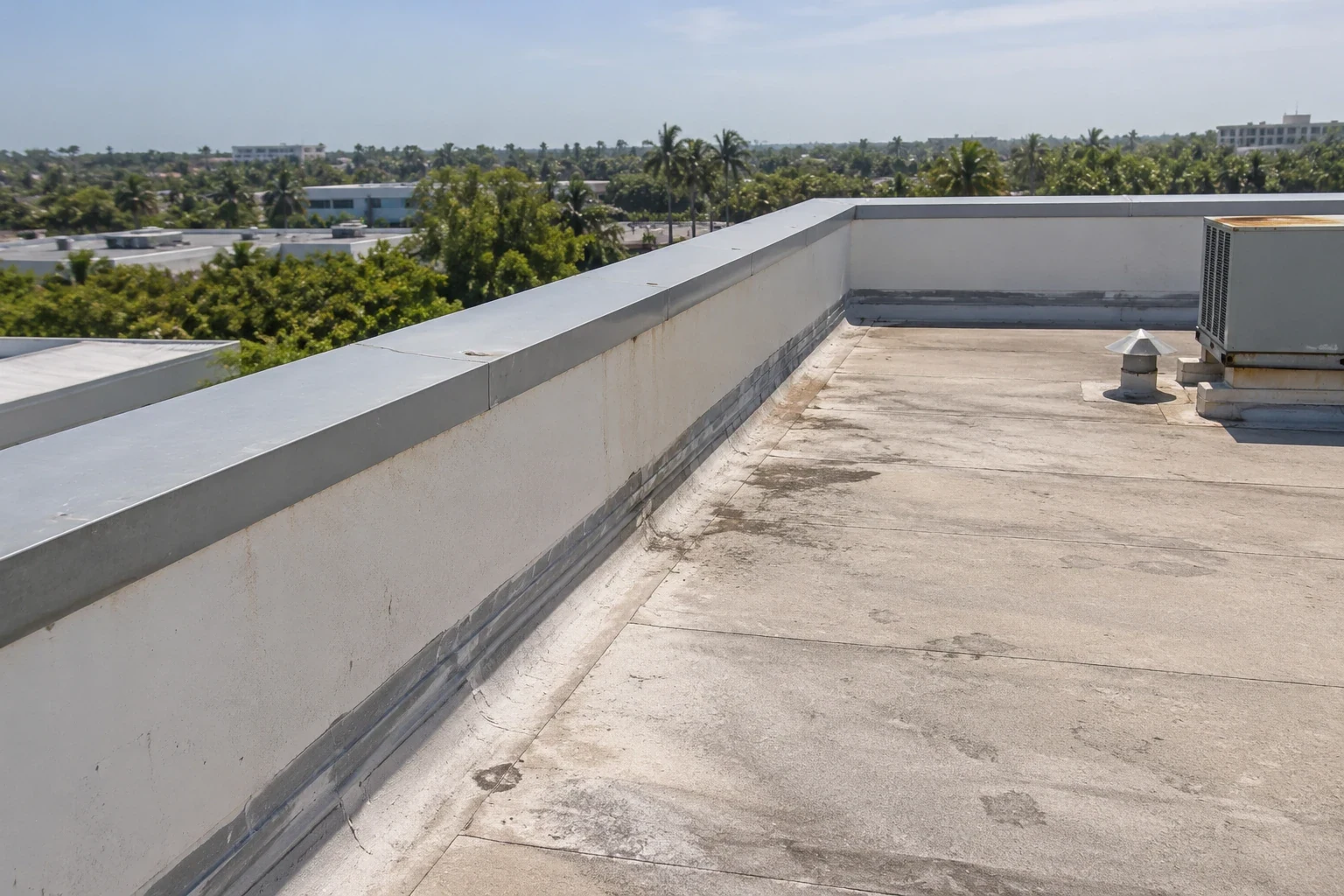
How does the South Florida calendar affect repair work?
South Florida’s wet season runs from May 15 to October 15, when most average annual rainfall occurs. Humid heat supports near-daily showers and thunderstorms across the peninsula. That calendar makes short surface-preparation windows and temporary protection part of the repair sequence. We schedule the work area around current conditions and close it before leaving the site.
Severe weather impacts, including damaging wind, tornadoes, hail, and flooding, are most likely during the stormiest mid-May to early-July period across South Florida. After a weather event, we document what is visible and separate emergency protection from permanent repair. A photo of displaced metal or a split seam supports a specific finding, while the broader weather calendar is planning context. We keep those two records distinct for the owner and project file.
For facilities with multiple locations, Miramar’s employment centers and corporate parks illustrate why local schedules can differ across a regional program. We record each property’s access, work hours, and repair sequence separately. If conditions require immediate protection, our emergency repair service can stabilize the affected area while permanent materials and approvals are arranged.
Industries We Work With
Owners and operators in these fields rely on us to plan roof work around their buildings.
Coordinate healthcare roof work in Miami Gardens, FL around patient routes, critical rooms, equipment, infection controls, and documented approval windows.
Coordinate 3PL roof work in Miami Gardens, FL around dispatch cycles, dock access, inventory protection, equipment routes, and phased closeout.
Plan school district roof work in Miami Gardens, FL around student routes, athletic spaces, summer windows, classroom protection, and board approvals.
Coordinate portfolio roof work in Miami Gardens, FL with area records, access windows, repair priorities, and approvals that keep each asset distinct.
Related Roofing Work
Other pages that cover the same roof question.
Roof leaking now? Call 555-555-5555 and we will send a crew to look at it.
When does a repair become capital work?
Repeated failure at the same seam, wet insulation extending beyond a patch, widespread membrane wear, or deteriorated edge conditions can move the discussion from repair to replacement. We compare the cost drivers qualitatively: repair area, surface preparation, access, material compatibility, interior protection, and the number of return visits. The owner sees which condition can be corrected now and which one should enter the capital sequence.
A series of isolated defects may still support targeted repair if the surrounding assembly remains serviceable. We mark those locations and set a follow-up item for the next review. If several areas show similar failure, a roof capital plan can group work by priority and access window. That comparison helps the general contractor coordinate repairs with equipment, façade, or interior projects already on the schedule.
Repair records also support a portfolio comparison without blending one roof’s condition into another. The team can use the same finding format while retaining separate photos, dates, and area notes for every site. We document the completed detail, materials used, and any remaining issue. A future maintenance visit can check the repaired seam or flashing and update the roof-area record.
How is the work controlled on site?
Before dispatch, we confirm who can authorize access, where the crew can stage, and whether the roof is clear around the repair. The general contractor can share drawings, leak history, equipment locations, and active trade work. We confirm each opening and protection measure with the site representative, then keep the work area limited to the approved scope. Any concealed condition is documented before it changes the package.
Miami Gardens’ regional road and rail connections can support commercial and distribution activity, but the actual material route and arrival window are determined with the property. The contractor should identify loading restrictions, vehicle circulation, and areas that cannot be blocked. We plan a route for tools and materials, protect equipment and finished surfaces, and coordinate closeout so the area is returned to operations.
For a commercial roof repair in Miami Gardens, confirm property-specific access and complete a field review before setting the repair boundary. Send the roof plan, known repair history, recent photos, and available access times. We will confirm the repair candidate, prepare the work package, and identify any additional inspection or approval before mobilization. The closeout report then shows the completed repair and the follow-up item, if one remains.
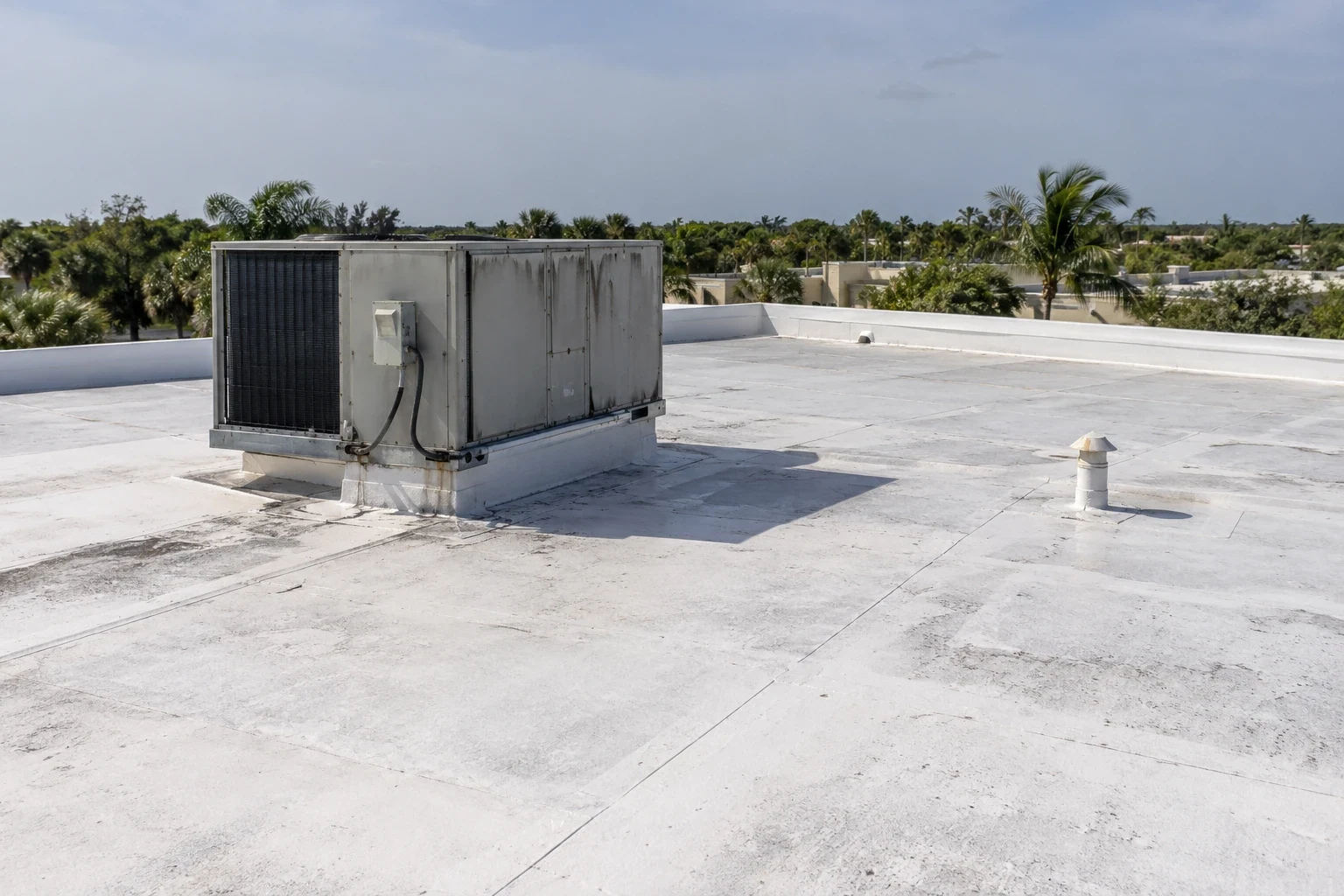
Scope the repair by roof area
Share the roof plans, recent leak photos, repair history, access rules, and operating schedule. We will inspect the affected details, prepare a repair package, and document approval and follow-up points.
Questions About Commercial Roof Repair
Will a roof patch stop water at the ceiling stain?
We trace the path from the roof surface through nearby seams, penetrations, and drainage details. The repair addresses the confirmed failure area, and we note any additional moisture or concealed condition that needs inspection before the scope is closed.
Can you repair a membrane without replacing the whole roof?
Yes, when the surrounding assembly remains serviceable and the failure is limited. We document the defect and nearby conditions, then identify whether a compatible patch or a broader work package fits the field evidence.
What information helps schedule a repair crew?
A roof plan, photos, leak history, equipment locations, access rules, and work-hour limits help us set the route and staging. The general contractor can also flag other trades or inspections that affect the same area.
How do you document a repair for the owner?
We record the roof area, defect, repair method, materials, and completion photos. Any open issue or recommended follow-up stays with the same area record so later inspections can check the right detail.
When should we request an inspection instead of another patch?
Repeated leaks, multiple failed details, soft insulation, or broad membrane wear call for a wider condition review. We map the affected areas and compare repair candidates with replacement or capital work before returning to patch the same location.