
Grocery Store Roofing in Miami Gardens, FL
Property Types We Roof
Plan grocery store roofing in Miami Gardens, FL around refrigeration equipment, receiving access, drainage, interior safeguards, and a clear work sequence.
Grocery Store Roofing Overview
Refrigeration lines, early deliveries, and temperature-sensitive rooms give a grocery roof a distinct work sequence. At a store in Miami Gardens, FL, we map rooftop equipment, penetrations, drains, and roof access against receiving hours and the areas the operator needs to protect. Miami Gardens identifies furniture shopping near the Palmetto Expressway and automobile activity along U.S. 441. Hialeah’s commercial mix includes manufacturing, retail, and restaurants. Those market facts help frame delivery and service questions; we confirm the store’s actual routes and operating plan before setting phases or pricing.
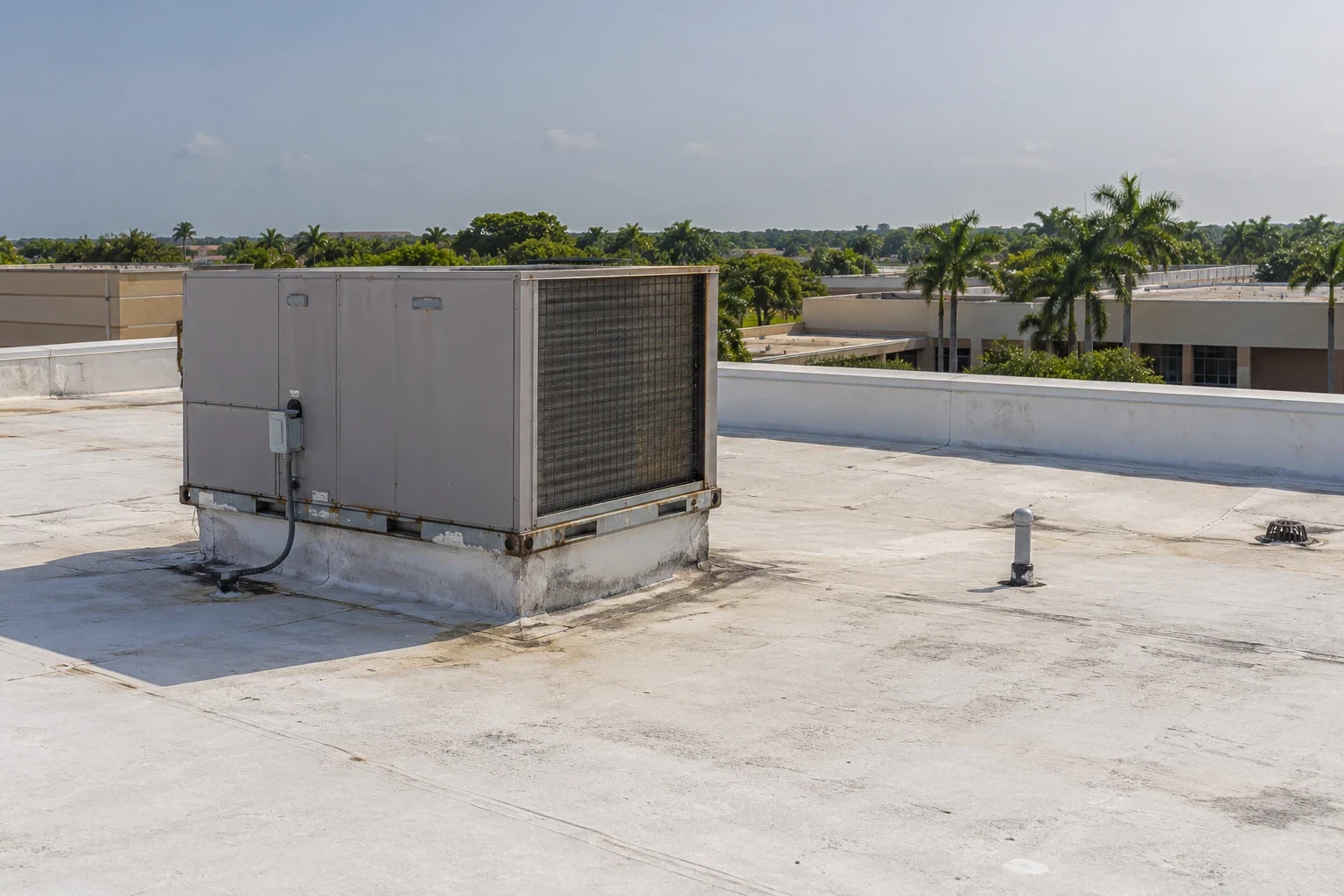
What needs coordination around refrigeration?
We locate rooftop condensers, line sets, curbs, supports, exhaust, drains, and the service paths used by refrigeration technicians. The store team identifies which units can be isolated, when a vendor is available, and what interior areas need protection if equipment work overlaps roofing. We document each trade interface and the person who can approve a temporary change. That planning helps avoid a finished flashing detail being disturbed by a later service visit or an uncoordinated equipment move.
Receiving lanes, compactors, customer entrances, fire access, and material staging need their own map. A grocery store may have morning deliveries while sales and stocking continue through the roof phase. We place lifts and containers only after the manager confirms the route and the general contractor approves the work limit. A shopping center plan can add shared drive aisles and adjacent tenants; a big-box retail sequence may have more open staging space. Those are useful comparisons, but the actual access window comes from this store’s operating plan.
Receiving access sets the material drop and debris-removal order for this store. We confirm the unloading period, gate route, emergency access, and whether a lift can work without crossing the truck path before assigning each roof zone its daily sequence.
More on Grocery Store Roofing
The sections below cover the questions property teams ask before they approve the work.
How do drainage and roof openings affect the scope?
We walk the roof slope and identify primary drains, overflows, scuppers, low areas, and discharge points before choosing an opening size. Grease exhaust, refrigeration lines, skylights, and other penetrations can create distinct flashing and maintenance conditions. We photograph each detail, check for loose seams or prior patches, and note where interior reports point to an area that needs closer review. A ceiling symptom can lead us to investigate, but water can travel before it appears below the membrane.
For South Florida, May 15 through October 15 is the wet season, with 60 to 70 percent of average annual rainfall falling during that span. Humid heat also brings showers and thunderstorms across the peninsula and nearby waters. A store’s roof schedule should therefore reserve enough time within each shift to protect refrigeration zones and finish temporary drainage before the crew leaves. The regional pattern is not evidence of a leak; roof observations and the current forecast determine the area that can safely be exposed.
If moisture is suspected around a curb or drain, we identify the test that could change the repair boundary. A moisture survey can guide selective confirmation, while a test cut may be considered when the layers or deck remain uncertain. The survey work package records its limits and findings by roof area. We distinguish measured conditions from areas that were inaccessible, so a single reading does not become a store-wide conclusion.
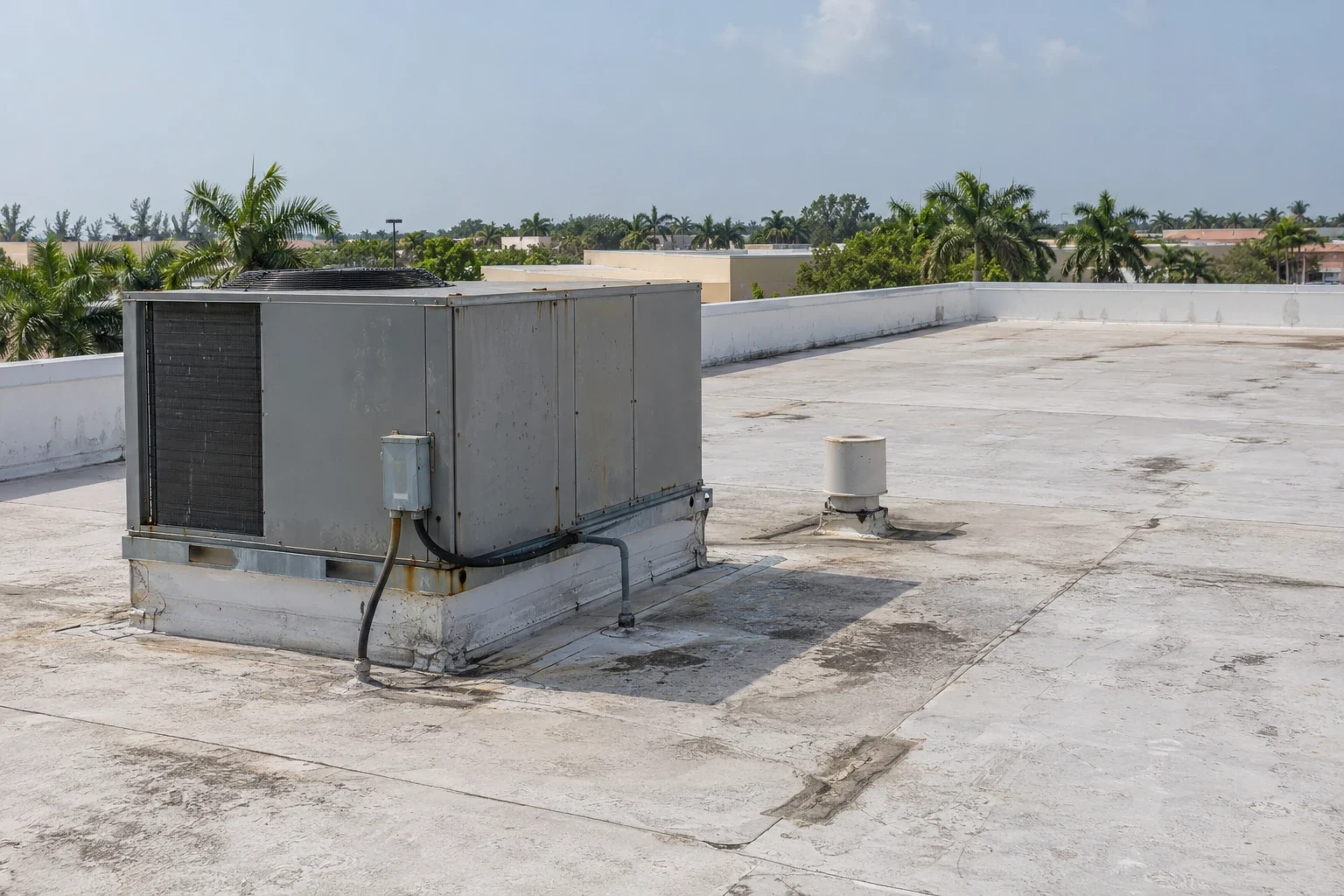
Which findings justify a broader repair boundary?
A localized puncture, open seam, or failed equipment flashing may be repaired where the surrounding membrane and insulation remain serviceable. Repeated leaks near several curbs, wet material spanning connected sections, or deterioration at roof edges can point to a broader scope. We show the repair candidate, photos, test results, and unresolved questions together. A defined repair package can then be compared with replacement using consistent access and refrigeration assumptions.
A recover requires a review of existing layers, moisture, deck condition, attachment, edge height, drainage, and applicable code. Added thickness may affect equipment curbs, parapets, drain bowls, service clearances, and future line maintenance. We identify what must be measured or tested before approval instead of treating a coating or overlay as a default solution. Tear-off depth, deck work, insulation, edge metal, equipment handling, and interior safeguards are separated in the estimate to show the main cost and timing drivers.
Miramar has restaurant and retail-center activity. Hallandale Beach includes shopping centers, hotels, and apartment buildings. For a regional operator, the variety can help frame portfolio-level capital planning, while this store’s refrigeration layout and inspection record must stand on their own. We keep its roof-area record independent and preserve the refrigeration trade’s responsibility at each curb and support.
Industries We Work With
Owners and operators in these fields rely on us to plan roof work around their buildings.
Coordinate healthcare roof work in Miami Gardens, FL around patient routes, critical rooms, equipment, infection controls, and documented approval windows.
Coordinate 3PL roof work in Miami Gardens, FL around dispatch cycles, dock access, inventory protection, equipment routes, and phased closeout.
Plan school district roof work in Miami Gardens, FL around student routes, athletic spaces, summer windows, classroom protection, and board approvals.
Coordinate portfolio roof work in Miami Gardens, FL with area records, access windows, repair priorities, and approvals that keep each asset distinct.
Related Roofing Work
Other pages that cover the same roof question.
Roof leaking now? Call 555-555-5555 and we will send a crew to look at it.
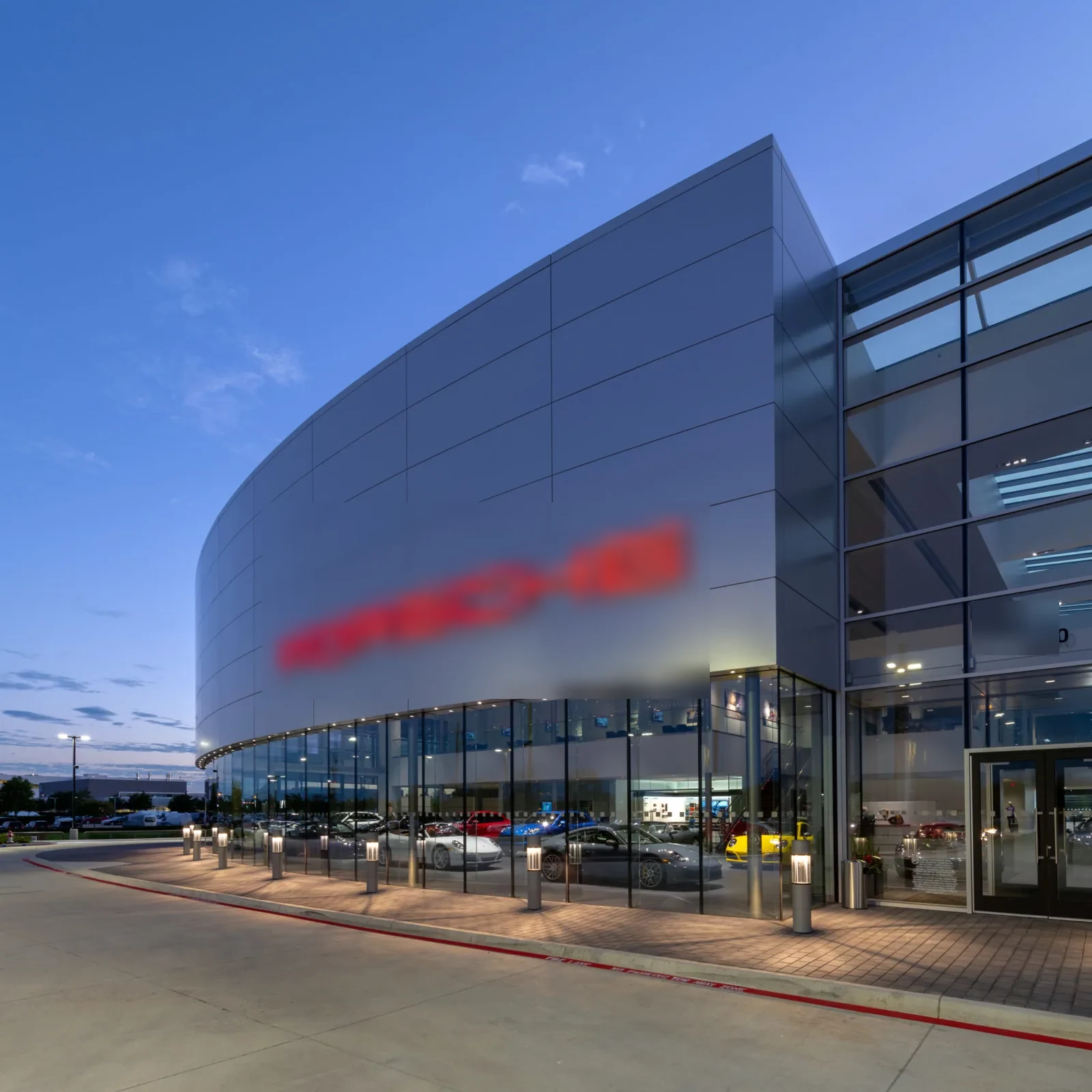
How should installation protect food operations?
For this store, the submittal must connect the permit documents to the existing roof profile and the selected insulation, attachment, and fire details. Wind design belongs in that same review. The design team should confirm the High Velocity Hurricane Zone requirements that apply to this permit and document the approved assembly against measured roof conditions. We compare a PVC assembly, TPO, or another compatible build-up with its drain, edge, curb, and penetration details. A material choice alone does not solve the work sequence around active refrigeration or deliveries.
The work sequence assigns each roof zone a shift-sized exposure limit and a documented handoff for temporary drainage, dry-in, and final closure. The daily plan shows lift location, delivery route, temporary drainage, interior safeguards, refrigeration trade handoffs, and who can approve a change when concealed conditions appear. The store manager can reserve the receiving lane, customer entrance, or aisle below the work before materials arrive. A phased occupied-building sequence keeps unaffected areas available only where the protection plan and operations permit it.
Weather holds, equipment availability, tear-off depth, wet insulation, deck repairs, and access restrictions can each move the schedule. We identify those drivers by phase and record any follow-up inspection needed after a refrigeration vendor completes work. For work in Hialeah or Miami Gardens, the regional weather calendar informs planning; the store’s access and temperature-control requirements set the approved work window.
What should the store team keep after the work?
Closeout should include installed materials, completed roof zones, approved changes, photos, drain checks, curb details, and open follow-up items. We record areas that could not be accessed and note where equipment work remains with another trade. The facilities lead can then compare a later symptom with the accepted work boundary and decide what inspection or repair should follow.
A maintenance visit can check drains, exposed seams, equipment flashings, and areas affected by service access. Before turnover, we identify how refrigeration contractors can reach units without cutting finished membrane or shifting a support without review. Send roof plans, equipment layouts, delivery windows, previous repairs, and the store calendar. We will return a roof-area record and phased package with access, protection, trade coordination, and approval points ready for review.
Coordinate the grocery roof work
Share roof plans, refrigeration layouts, delivery windows, repair history, and operating limits. We will map the roof areas and trade handoffs for a sequenced field review.
Questions About Grocery Store Roofing
Can refrigeration stay online during roof replacement?
The equipment plan and work boundary determine whether units can remain in service. We coordinate any isolation or movement with the store’s refrigeration vendor and record the approval before opening the surrounding assembly.
How do you schedule around deliveries?
The manager identifies receiving periods and routes that cannot be blocked. We set lift placement, material movement, and daily closure limits with those operating windows in view.
What does a roof leak report prove?
It identifies a place and time to investigate, not the full water path. We inspect above the reported area, map findings, and recommend testing if concealed layers could change the repair scope.
Could a coating solve recurring curb leaks?
Only if the membrane, curb details, moisture, and preparation support that system. We inspect the affected interfaces and compare a defined repair or restoration scope with other options.
What should be ready before the inspection?
Provide roof plans, equipment and line layouts, delivery rules, leak records, access procedures, and vendor contacts. We use them to map the inspection and identify trade approvals.