Commercial Roof Due-Diligence Surveys in Miami Gardens, FL
Roofing Capabilities
Review commercial roof conditions in Miami Gardens, FL before acquisition or refinancing with field photos, access notes, repair scope, and open questions.
Commercial Roof Due-Diligence Surveys Overview
A roof survey for an acquisition needs to separate what is visible from what still needs confirmation. In Miami Gardens, FL, we review the available roof plans and repair history, then inspect accessible areas, system details, drainage, penetrations, and signs of prior work. The buyer or general contractor receives photos and a written list of repair candidates, estimated scope drivers, access limits, and follow-up questions. We do not turn a brief visit into a promise about remaining service life or concealed conditions.
Across the peninsula, 60% to 70% of normal annual rain falls in the mid-May to mid-October wet-season interval. Use that regional timing to plan review access and temporary protection; it says nothing about the leak history or condition of one roof. We identify actual staining, open details, ponding indicators, and testing needs. A commercial roof inspection creates the field record for the transaction file.
Which records should be assembled first?
Useful materials include roof plans, project submittals, warranty documents, prior service tickets, photographs, leak logs, and any available closeout notes. We compare those records with what can be seen from the roof and interior access provided. If dates, system labels, or repair locations conflict, we list the discrepancy for the buyer rather than choosing one record without support. The survey should identify which records support each conclusion and where the file remains incomplete.
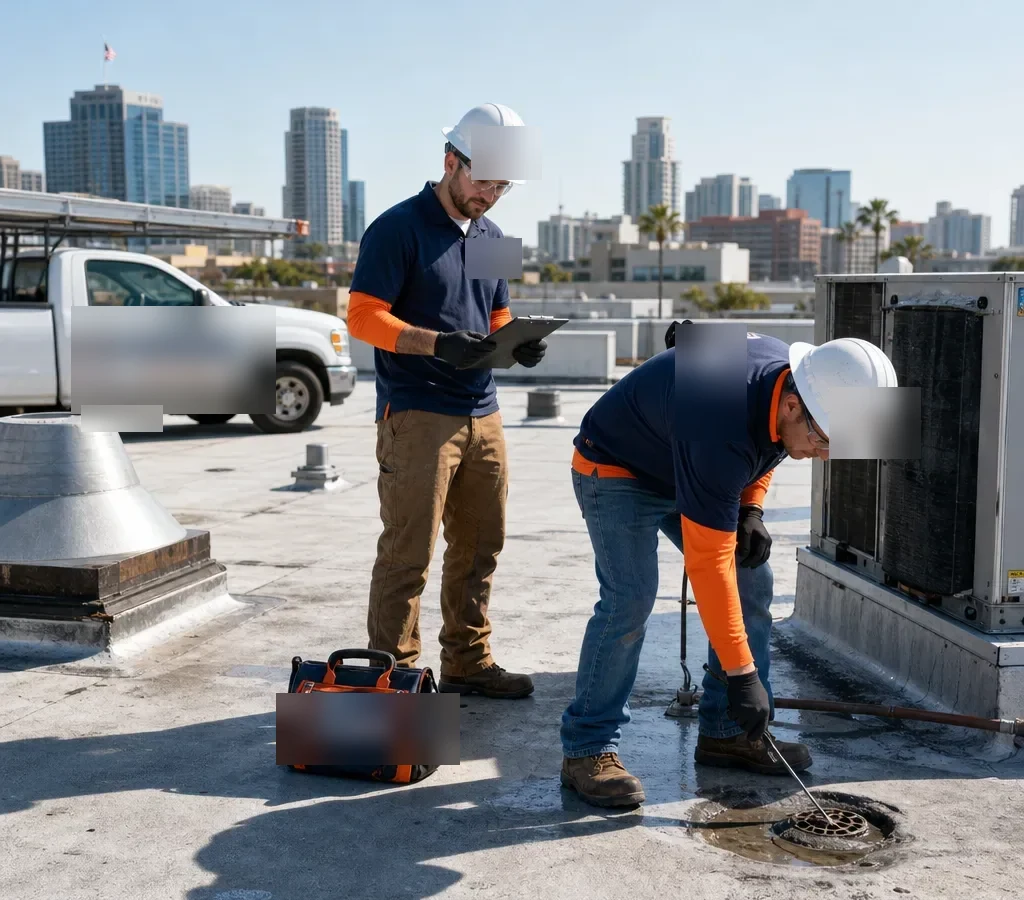
A site visit also needs an agreed access window, escort or site contact where required, fall-protection limits, and permission for any selective opening. We note roof sections that could not be reached, along with equipment, tenant activity, and staging restrictions that shaped the review. If plans omit a transition or an addition, the field sketch records that gap. A photo-based condition report can connect each finding to its location and next action.
More on Commercial Roof Due-Diligence Surveys
The sections below cover the questions property teams ask before they approve the work.
What can the survey confirm in the field?
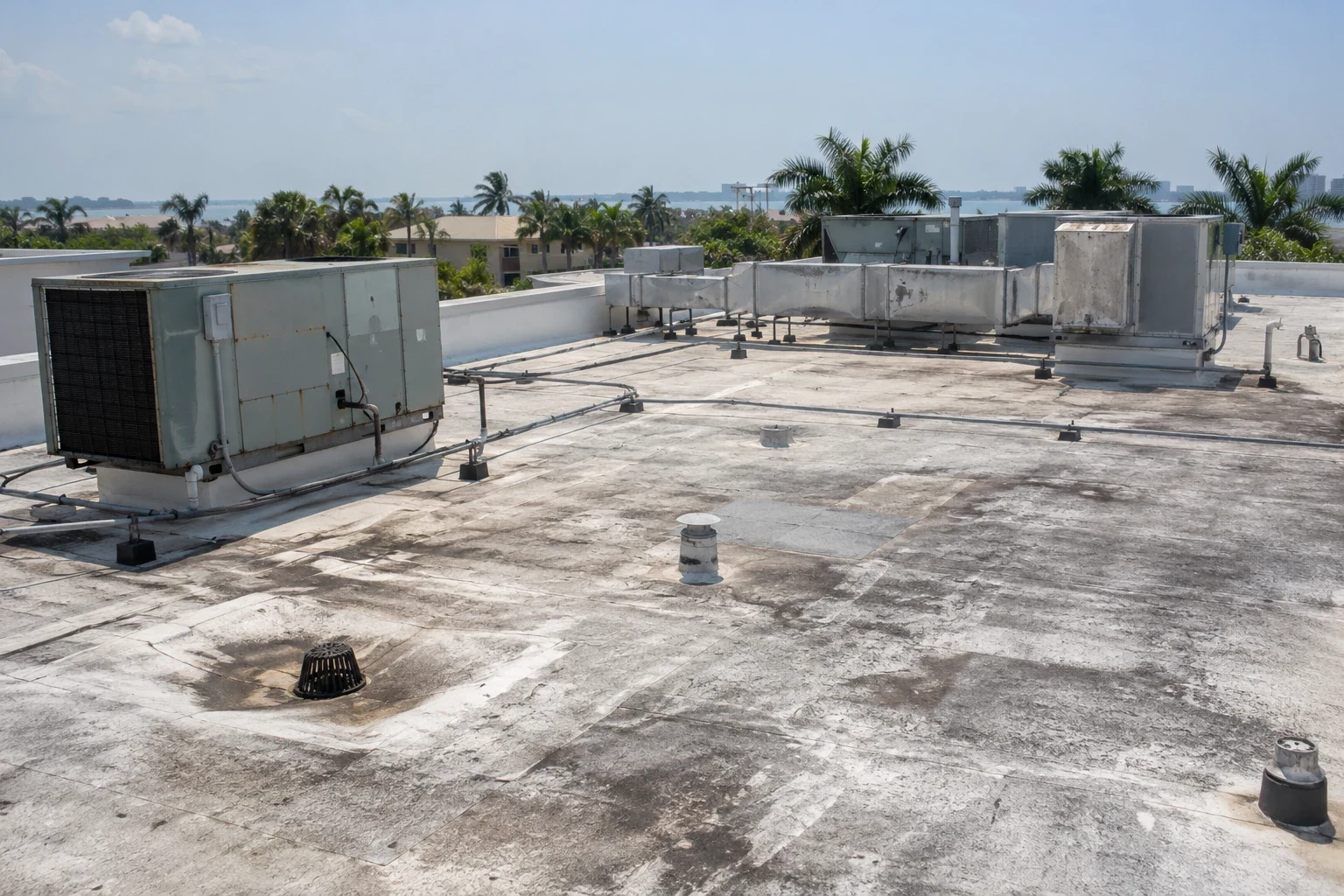
We identify the membrane, metal, or coating assembly where visible, then review seams, flashing, curbs, penetrations, edge metal, drains, scuppers, and transitions. Observed wear, punctures, open joints, soft areas, and previous patches are recorded by roof zone. The survey does not claim to see through an assembly. If moisture or deck condition is uncertain, we recommend a testing method or selective opening for buyer approval and show how that result could change the scope.
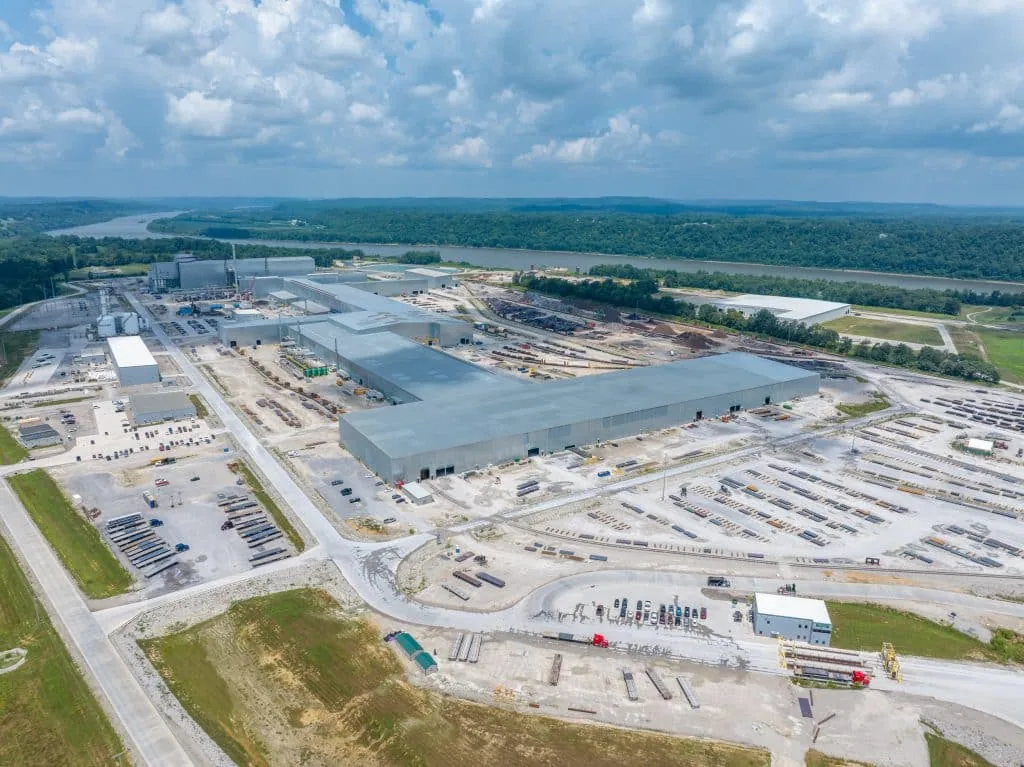
Miami Gardens identifies furniture commerce near the Palmetto Expressway and automobile trade along U.S. 441. We record actual delivery activity and operating constraints during the site review instead of inferring a building’s use or roof assembly from its corridor. When a large section is difficult to access, an aerial inspection may assist with mapping; a moisture survey can identify areas that warrant closer evaluation.
How should open risks be described?
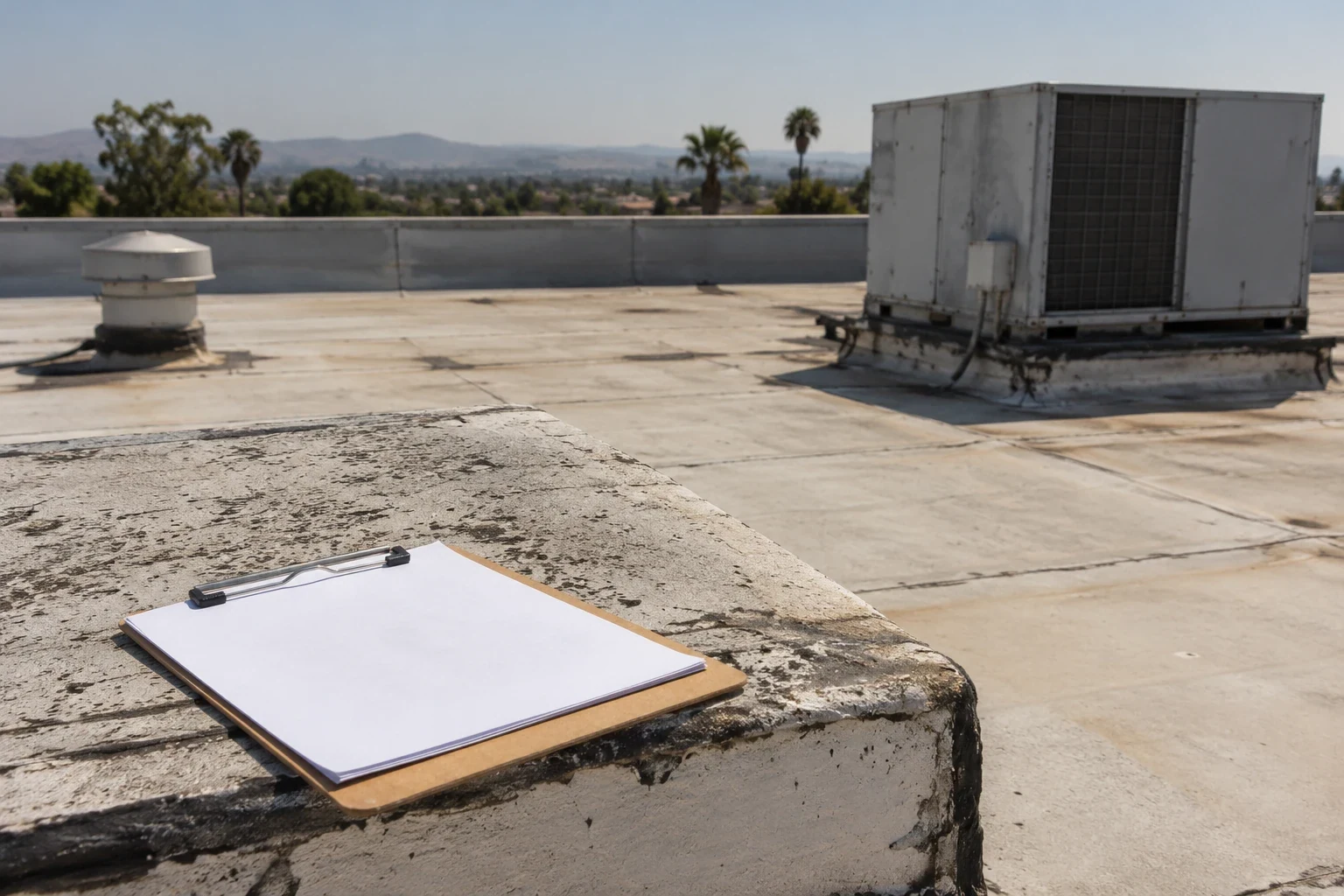
Each issue is tagged as an observed repair, a condition to investigate, or an operating constraint. We describe the evidence, approximate roof area, urgency, and the information still needed before a firm scope can be set. A recurring leak near a curb may justify tracing the water path; it does not prove that all insulation in the zone is wet. An allowance should remain an allowance until testing or opening confirms the quantity and affected layers. We identify whether the next step is a selective cut, moisture mapping, or a review of the flashing detail, and note who must approve that work.
For a buyer, the practical question is often what must be addressed before the building changes hands and what can enter the next capital cycle. We show the condition that drives each choice, the area involved, and the access needed. If an interior mark does not line up with a visible roof detail, we keep that mismatch open for tracing rather than assigning a cause. This allows the transaction team to discuss a defined repair, further investigation, or a documented exclusion with the evidence in view.
Aventura lies between Miami and Fort Lauderdale, immediately east of I-95, with its western boundary following the Florida East Coast Railway. Retail and medical services are among Aventura's local economic drivers. For a property review in this area, we record the actual tenant access and delivery route instead of inferring them from surrounding land uses. The risk register can distinguish an access delay from a roof defect. A flashing repair scope or drainage review is proposed only when the field observations support it.
Industries We Work With
Owners and operators in these fields rely on us to plan roof work around their buildings.
Coordinate healthcare roof work in Miami Gardens, FL around patient routes, critical rooms, equipment, infection controls, and documented approval windows.
Coordinate 3PL roof work in Miami Gardens, FL around dispatch cycles, dock access, inventory protection, equipment routes, and phased closeout.
Plan school district roof work in Miami Gardens, FL around student routes, athletic spaces, summer windows, classroom protection, and board approvals.
Coordinate portfolio roof work in Miami Gardens, FL with area records, access windows, repair priorities, and approvals that keep each asset distinct.
Related Roofing Work
Other pages that cover the same roof question.
Roof leaking now? Call 555-555-5555 and we will send a crew to look at it.
What makes a roof allowance change?
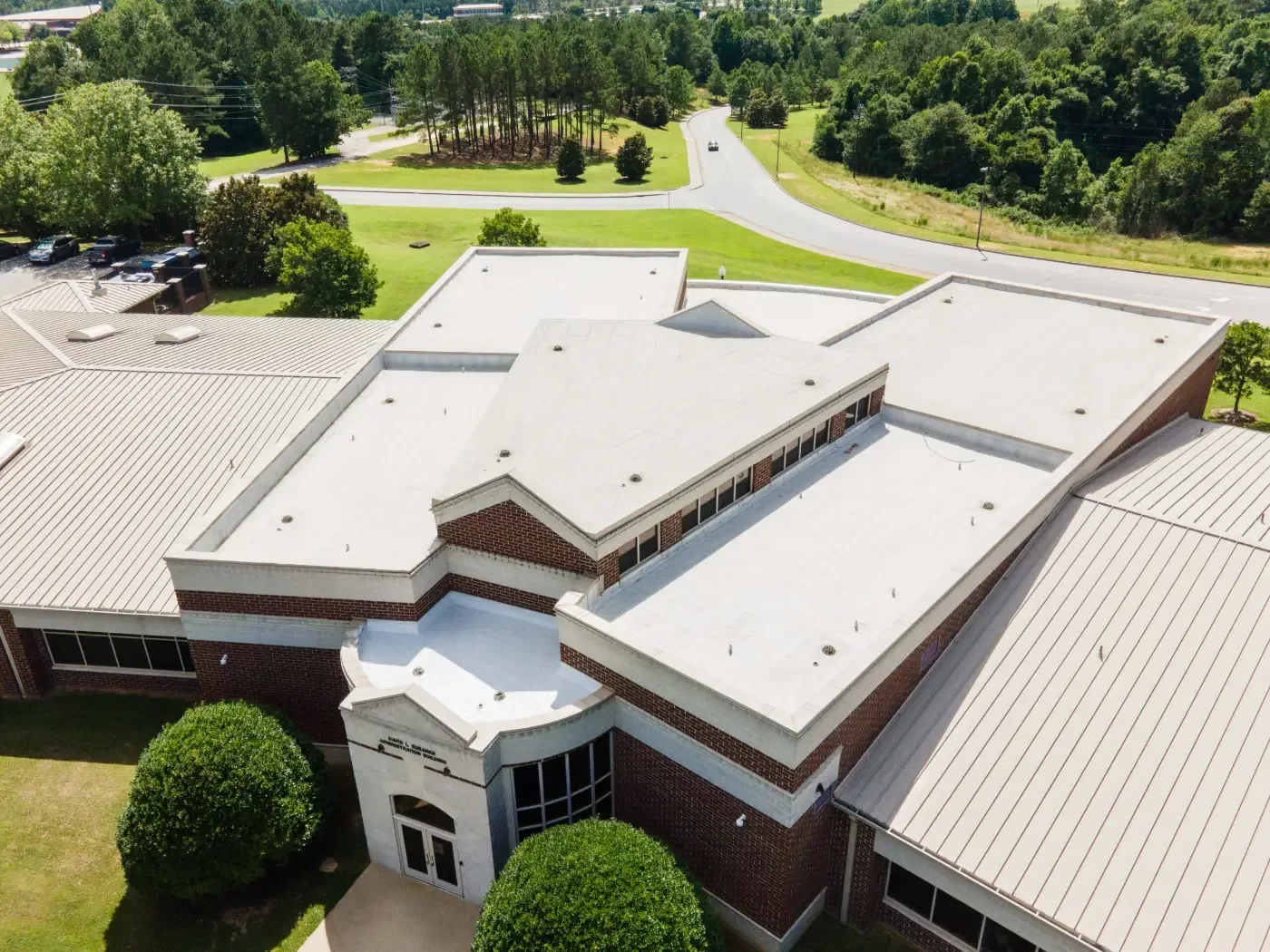
Scope and cost can change with measured area, tear-off layers, insulation and deck condition, edge complexity, equipment moves, disposal, staging, and protection needed while the roof is open. We list those drivers beside the affected areas and separate confirmed work from investigation. If an acquisition timeline requires a preliminary allowance, we state its basis and what evidence would narrow it. We do not describe an untested assembly as ready for recover or replacement. Where a roof ties into parapets, skylights, or equipment curbs, we note those details because they may require separate flashing work or trade coordination.
The survey can compare repair, restoration, and replacement paths without selecting for the buyer. The capital planning review can organize candidate work by sequence, while replacement planning defines a boundary after the assembly and scope are confirmed. Miami Lakes integrates residential, commercial, and industrial uses, and its town history identifies dedicated business parks. For assets in Miami Lakes, each building still needs its own records and field findings before portfolio conclusions are drawn.
What belongs in the buyer's handoff?
The handoff should include a roof-area sketch, dated photos, observed conditions, repair candidates, access notes, documents reviewed, and questions that remain open. We identify any warranty papers supplied for review, but do not determine coverage. The buyer can assign follow-up to a building contact and decide whether to authorize further testing, repairs, or a capital scope. Each recommendation should be traceable to evidence and a defined roof area. We can sort items by the timing the buyer provides, separating a decision needed before closing from work that can wait for an approved capital cycle.
Share the transaction schedule, roof plans, inspection permissions, occupancy limits, and prior repair records. We will complete the field review and return a report with visible findings, scope drivers, and next approval points. For properties in Miami Gardens and Aventura, the survey follows the actual building and access window rather than assuming that a neighboring property has the same assembly.
Before the report is issued, the transaction lead can review each open item against the closing or financing calendar and identify which decision needs an answer first. We can label follow-up by roof area, evidence still needed, and party responsible for approval. That may mean requesting a repair history, arranging a sample opening, or confirming access to a room below a reported leak. If none of those steps can be completed before the transaction milestone, the report should preserve the limitation and its effect on the recommendation. A dated handoff keeps the buyer's next capital decision tied to what was actually observed.
Set the transaction roof review
Send the transaction schedule, roof plans, access permissions, occupancy limits, and repair history. We will document accessible roof areas, identify scope drivers, and return follow-up questions for the buyer's review.
Questions About Commercial Roof Due-Diligence Surveys
Can a roof survey determine remaining service life?
A field survey documents visible condition, known repair history, and areas that need testing. It does not establish an exact remaining life when concealed conditions, assembly records, or future maintenance are unknown.
What if the seller has no roof plans or repair log?
We record which documents were unavailable and build the field review around accessible areas and visible details. The report can identify measurements, selective openings, or testing that a buyer may authorize to reduce the unknowns.
Will the survey include a replacement estimate?
We can identify replacement scope drivers and a boundary when evidence supports it. If the assembly or deck remains unverified, those items stay as investigation or allowance rather than a firm quantity.
Can we complete the review before a refinancing deadline?
Set a field visit around the deadline and access window you provide. The report will separate completed observations from locations that could not be reached or need additional testing.