
Commercial Roof Flashing Repair in Miami Gardens, FL
Roof Damage Repair
Repair commercial roof flashing in Miami Gardens by mapping the transition, tracing water paths, and defining a supported repair boundary.
Commercial Roof Flashing Repair Overview
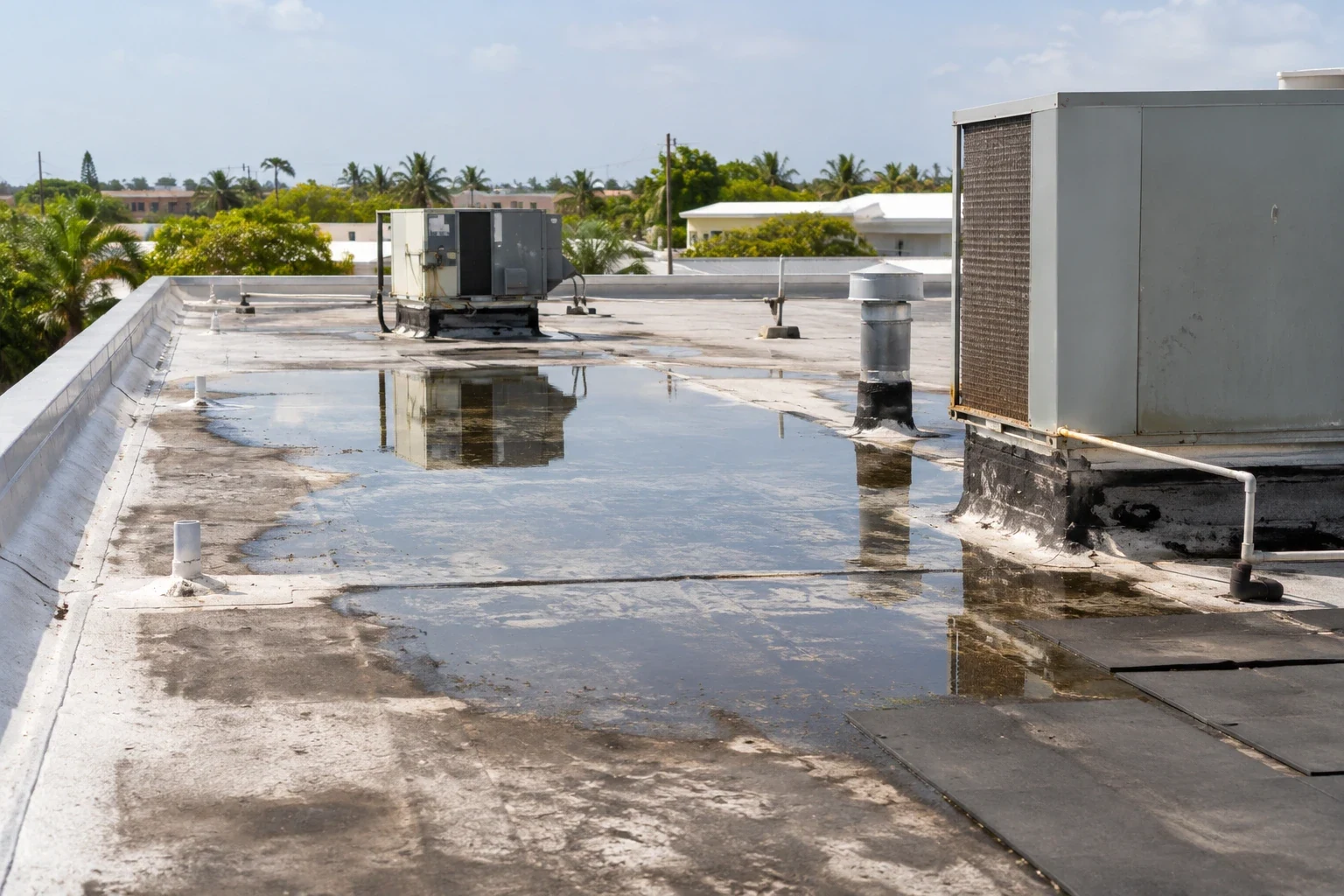
A flashing repair begins at the transition where water, movement, and building materials meet. For a commercial property in Miami Gardens, FL, we inspect curbs, parapets, walls, penetrations, edges, and roof drains before deciding what must be opened. South Florida's humid wet season brings frequent showers and thunderstorms, so a small split can turn into an interior report quickly. The field record should identify the actual defect, nearby roof conditions, and what protection is needed while the permanent detail is repaired.
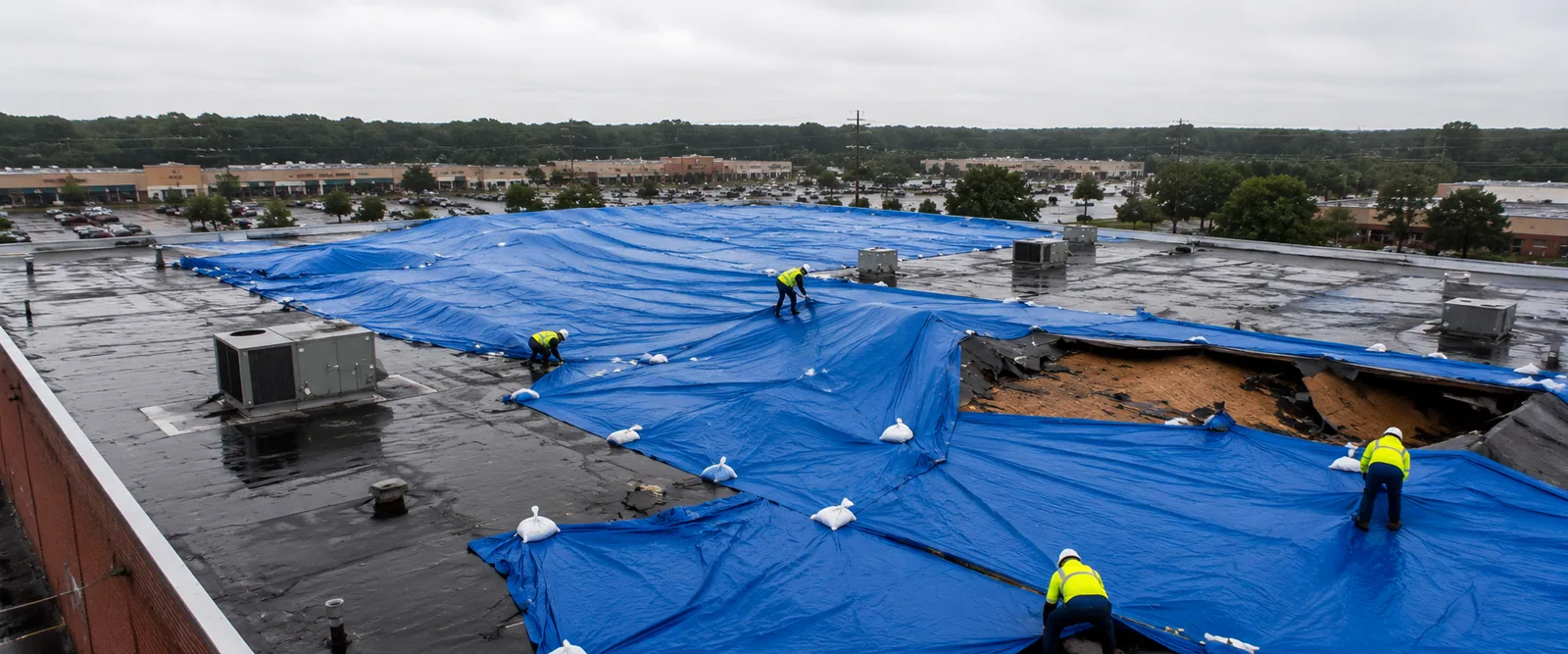
Which transition should the inspection follow first?
We start with the reported stain or leak, then trace the surrounding roof path toward the nearest curb, wall, drain, skylight, or equipment support. Flashing can fail at an open lap, loose termination, cracked sealant, damaged counterflashing, or movement between dissimilar materials. We photograph each transition with a reference point and note whether water is also visible at seams or drainage points nearby. A photo-based roof condition record helps the owner compare that detail with earlier repairs instead of assuming the newest symptom marks the original entry.
Access below the transition matters too. The site contact identifies rooms, tenant paths, equipment, and any activity that must continue during inspection. Hialeah's commercial area on West 49th Street serves businesses and shoppers, and Opa-locka’s redevelopment framework includes commercial, residential, retail, and recreational activity in designated areas. Those nearby operating contexts show why delivery, parking, and public routes belong in a work plan. They do not tell us what kind of flashing sits on an individual building, so the crew records the material, attachment, and condition at the site.
More on Commercial Roof Flashing Repair
The sections below cover the questions property teams ask before they approve the work.
How do we separate a failed detail from a wider issue?
A flashing defect may be isolated, or it may be the point where movement, drainage, and membrane deterioration meet. We check whether the termination bar remains secure, whether the counterflashing sheds water, and whether the membrane turns up high enough at the curb or wall. Sealant can cover a joint but cannot replace a failed attachment or incompatible assembly. A seam repair review may be needed if water crosses an adjoining lap, and a wind-damage inspection can document displaced metal after a severe-weather report.
Moisture testing is considered when visible signs do not define the full extent. We explain what a test can establish, where it will be taken, how the opening will be restored, and who must approve it. The inspection report marks the confirmed repair boundary separately from the area that needs investigation. If wet insulation or substrate damage is found, the proposal can state the removal and replacement limit rather than bundling hidden work into an undefined allowance. That gives the owner a clear choice between a local detail repair and a larger assembly correction.
Before resealing a wall termination, we check how the counterflashing overlaps the roof membrane and whether the upper edge is protected from direct water entry. At equipment curbs, corners and support points deserve individual review because a small split may continue under a counterflashing leg. The repair sketch can show each of those locations and the adjacent surface that will be disturbed, giving the installer a defined stop line and the owner a clear closeout target.
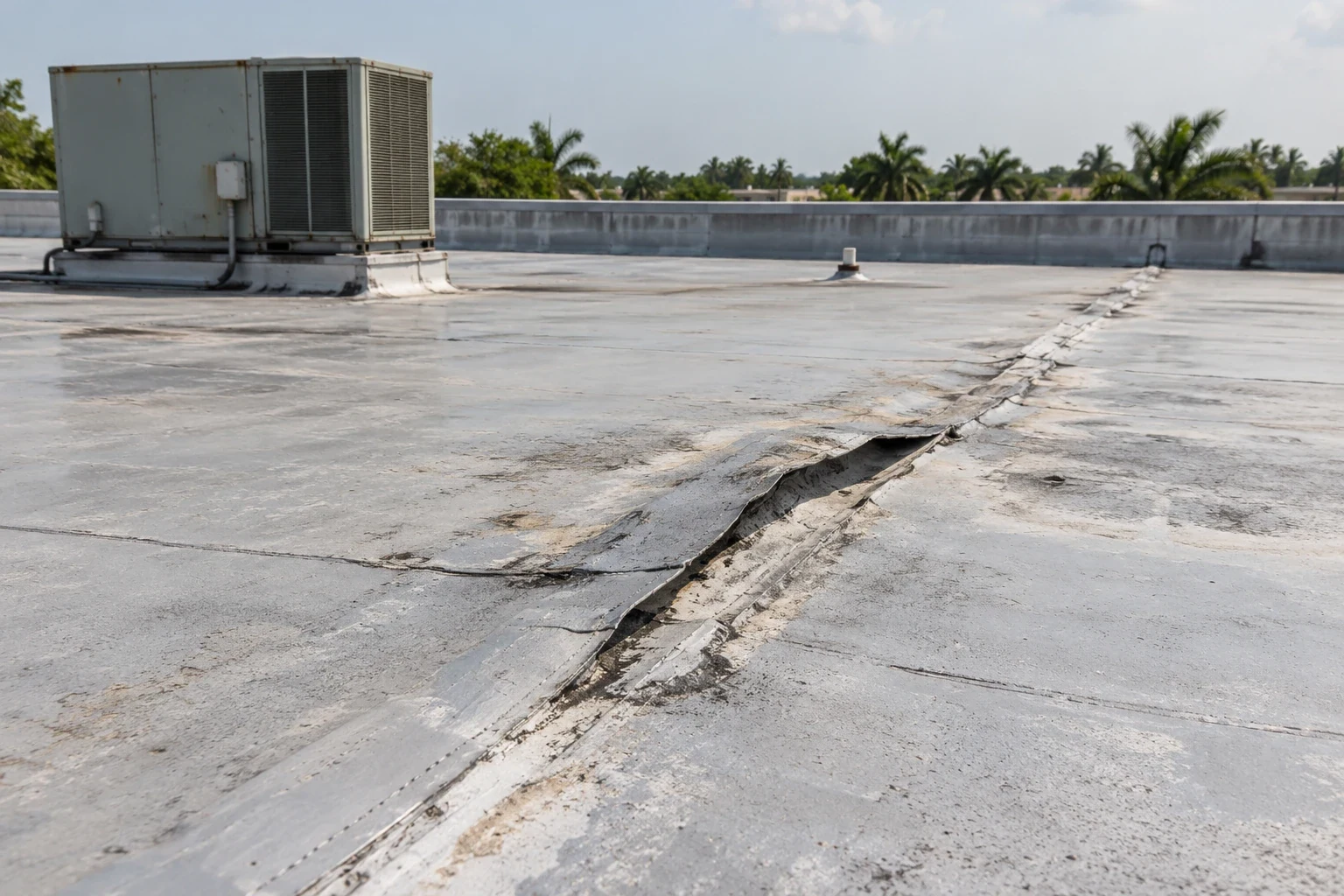
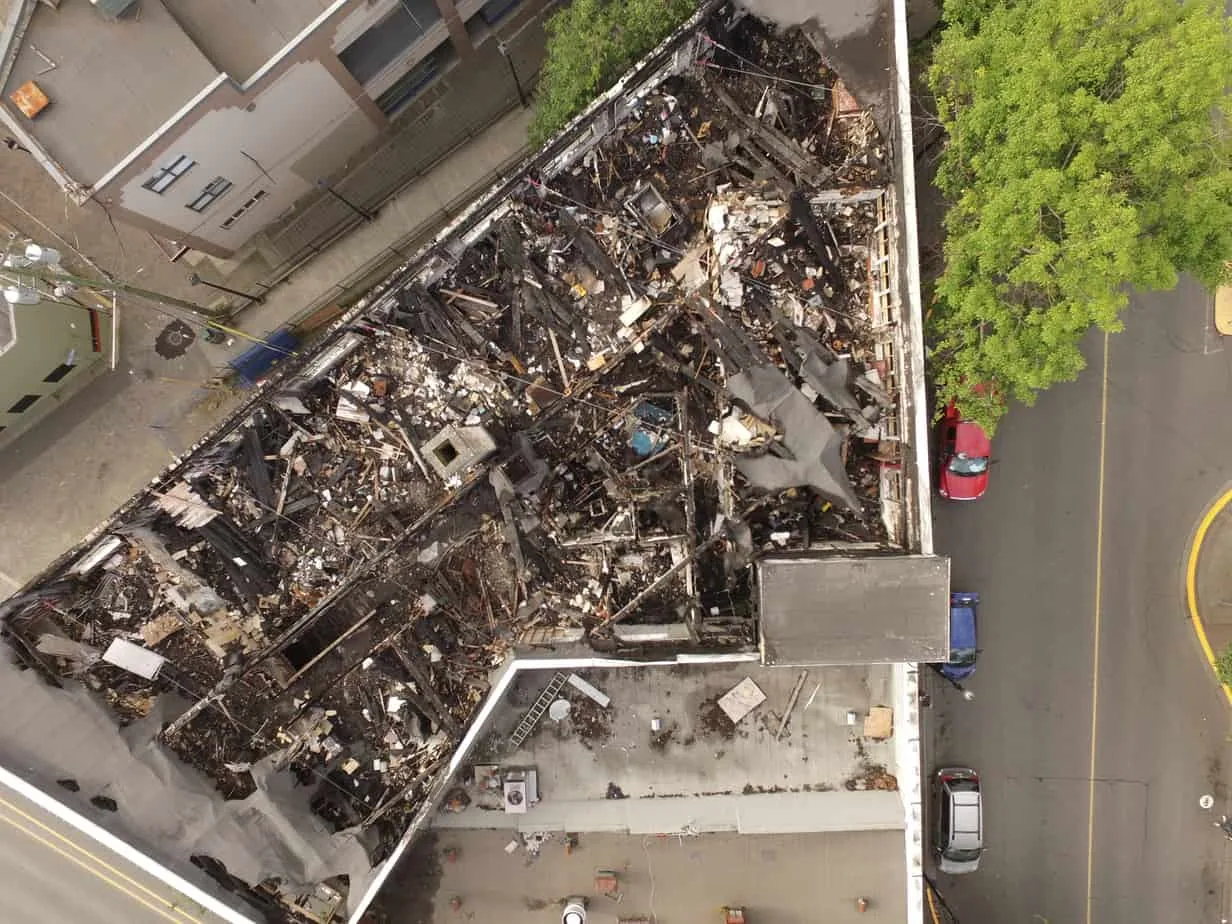
What does a durable flashing repair require?
The repair method follows the existing roof system and the approved detail. We remove failed material as needed, prepare the substrate, restore the membrane or metal transition, and secure the termination with compatible components. At a curb, we inspect corners, fasteners, counterflashing, and the connection to the roof field. At a wall or parapet, we check whether the upper edge sheds water and that movement joints remain functional. A penetration flashing scope can clarify work at curbs and openings without assuming every roof penetration has the same configuration.
System type changes the repair sequence. A TPO detail needs compatible flashing material and properly welded seams, while a metal roof needs attention to panel movement, clips, closures, and fasteners. A TPO system review or standing-seam detail check can help the general contractor align product submittals and field conditions. We test the completed transition as required by the specification and record photographs before concealment. If a follow-up inspection is needed, the closeout file names the area and the person responsible for releasing it.
Industries We Work With
Owners and operators in these fields rely on us to plan roof work around their buildings.
Coordinate healthcare roof work in Miami Gardens, FL around patient routes, critical rooms, equipment, infection controls, and documented approval windows.
Coordinate 3PL roof work in Miami Gardens, FL around dispatch cycles, dock access, inventory protection, equipment routes, and phased closeout.
Plan school district roof work in Miami Gardens, FL around student routes, athletic spaces, summer windows, classroom protection, and board approvals.
Coordinate portfolio roof work in Miami Gardens, FL with area records, access windows, repair priorities, and approvals that keep each asset distinct.
Related Roofing Work
Other pages that cover the same roof question.
Roof leaking now? Call 555-555-5555 and we will send a crew to look at it.
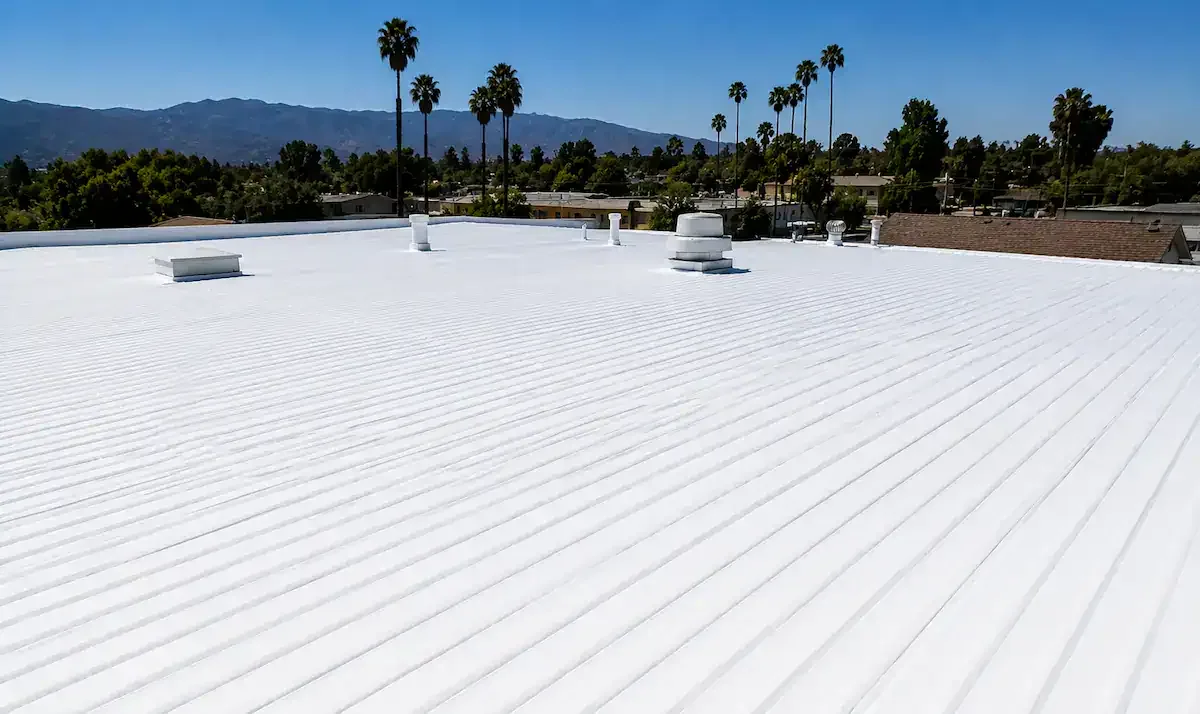
How should rain and access shape the repair window?
South Florida's wet season runs from May 15 through October 15, accounting for 60 to 70 percent of average annual rainfall. That regional pattern informs how we plan the opening and temporary cover, while the daily forecast governs the specific shift. We set an area limit, identify the protection method, and reserve time to inspect the secured roof before leaving. If the detail cannot be completed safely in the available window, the team protects it and records what remains for the next approved access period.
Opa-locka's development framework accommodates commercial and industrial uses, and Hialeah identifies manufacturing, retail, and restaurants among its major economic sectors. Across these active business areas, a repair plan may need to keep customer routes, deliveries, and service access clear. We confirm staging, lift placement, debris handling, and the person who can authorize a temporary closure. For an urgent opening, around-the-clock emergency roof response is available every day, including weekends and holidays, with the temporary condition and follow-up work recorded for the owner.
What should the flashing estimate and closeout show?
The estimate identifies the transition, materials, attachment, adjacent areas to inspect, and any testing or design approval still required. Cost and timing can change with access equipment, concealed moisture, damaged substrate, removal limits, and the need to coordinate another trade. We separate those drivers and state which condition would trigger additional work. If a broader leak investigation is appropriate, a commercial roof inspection can extend the evidence beyond the single flashing detail.
At closeout, retain dated photographs, the repaired location, approved changes, material information, and any remaining follow-up. The report should state whether the original termination remains accessible for later review and whether the repaired area needs a water test or visual check. Those details help maintenance staff find the transition without removing adjacent equipment or guessing which wall line was included.
A maintenance plan can include recurring checks of flashings, sealants, and nearby drainage. The record should make it easy to see whether later water reports concern the same transition or a different roof area. That distinction supports a focused repair decision and prevents the building manager from treating every interior symptom as proof that the original detail failed again.
Review the roof transition
Send the roof plan, leak location, repair history, and access limits. We will map the flashing detail, identify the repair boundary, and outline any testing or approval needed.
Questions About Commercial Roof Flashing Repair
Can new sealant fix failed roof flashing?
Only when the joint and attachment remain sound and the sealant is compatible. We inspect the termination and substrate first, then price the preparation or replacement that the detail requires.
Why can a leak appear far from the flashing?
Water can travel along a roof assembly or structure before becoming visible indoors. We map the symptom and inspect nearby transitions, seams, and drainage before fixing the boundary.
Will the whole roof need to be opened?
We limit investigation to the evidence needed for a decision. If testing shows the affected area is larger, the owner receives the location, photographs, and proposed scope before added work proceeds.
How do you protect the building during flashing work?
The work package sets the opening size, cover method, access route, and closeout check. We coordinate interior or tenant protection with the site contact and record any remaining limitation.
What records should accompany the completed repair?
Keep the approved detail, dated photos, material and attachment notes, test results, and any deferred inspection item. Those records help compare future symptoms with the repaired transition.