Restaurant Roofing in Miami Gardens, FL
Property Types We Roof
Plan restaurant roofing in Miami Gardens, FL around kitchen exhaust, guest access, drainage, service windows, and interior protection.
Restaurant Roofing Overview
A kitchen exhaust curb, rooftop unit, or open dining room can determine when a restaurant roof may be accessed. For a property in Miami Gardens, FL, we start by mapping the roof details against service hours, delivery routes, guest entrances, and the interior areas below each work zone. Hialeah has a mix of manufacturing, retail, restaurants, and business activity along West 49th Street. That regional context does not describe a restaurant’s roof or schedule. Our inspection establishes the actual membrane, flashing, drainage, and access limits before we price a repair or replacement package.
Which operating windows shape roof access?
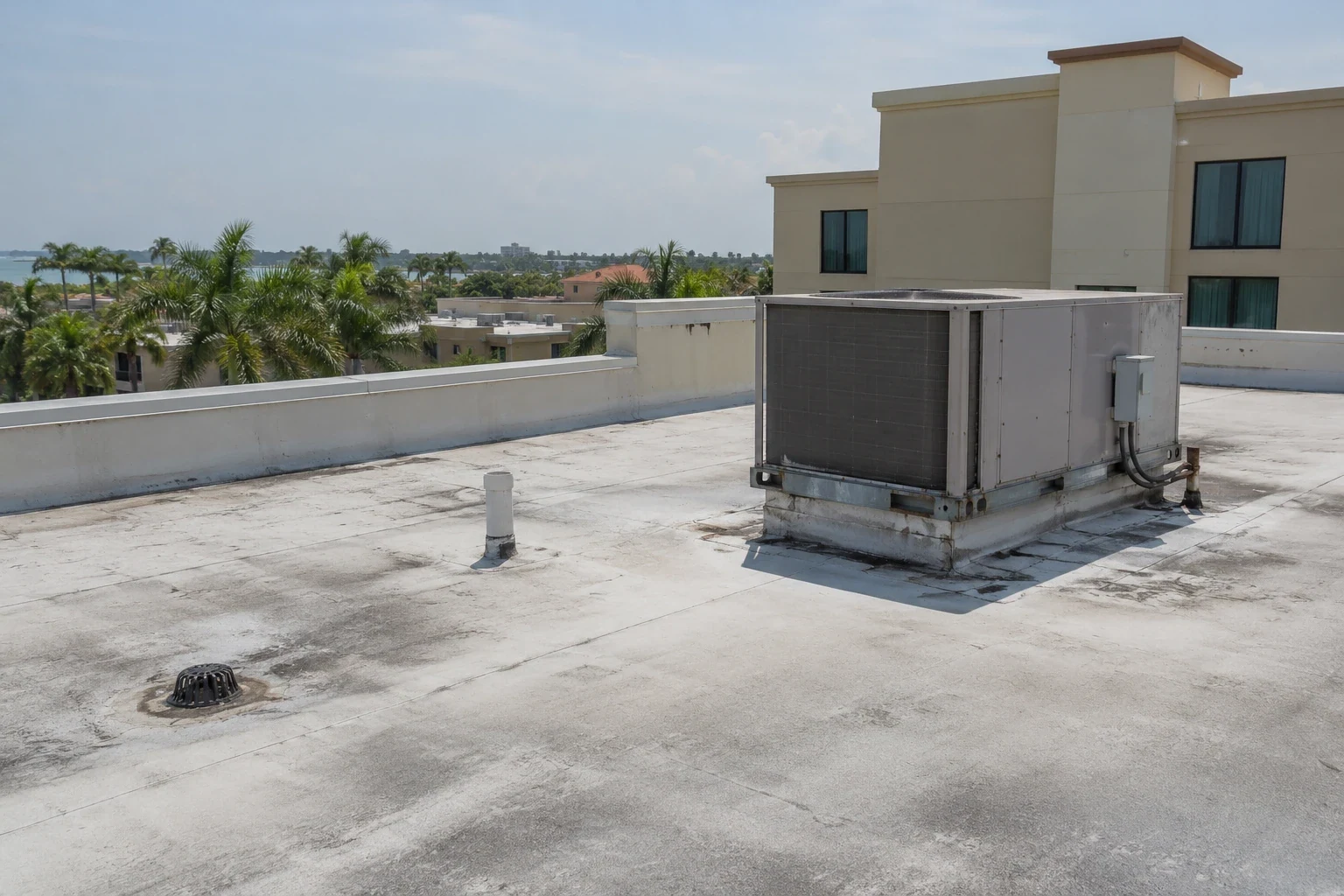
We ask the owner or general contractor to mark kitchen prep, delivery, waste pickup, opening hours, and guest periods that cannot be interrupted. The site plan also identifies fire access, pedestrian paths, lift placement, and the space available for tear-off containers or material staging. On the roof, we record exhaust hoods, grease duct terminations, curbs, condensers, penetrations, drains, and service routes for other vendors. Those constraints determine the access window and temporary protection plan for each phase.
A restaurant in a multi-tenant center may share loading areas, sidewalks, and canopy edges with nearby businesses. A freestanding building may have fewer shared routes but a narrower service yard or parking field. We compare those conditions with the shopping-center sequence and hotel roof planning without assuming the same occupancy needs. The manager approves the daily boundary and the area that must be returned to normal operations before the next service period.
Miami Gardens places furniture retail in its Palmetto Expressway shopping district and identifies U.S. 441 with automobile trade. Hialeah's West 49th Street commercial area serves businesses and shoppers. These local descriptions offer context; the operator confirms the restaurant's own gate, receiving route, curb lane, kitchen access, and customer path.
More on Restaurant Roofing
The sections below cover the questions property teams ask before they approve the work.
What does the roof review need to trace?
We examine flashing at exhaust curbs, duct supports, pipe penetrations, parapets, skylights, and transitions to canopies or adjoining construction. Grease residue, vibration, and recurring vendor access can affect surface preparation and future service, so each interface is photographed and located. We also check primary drains, overflows, scuppers, gutters, and low areas. A slow drain or ponded section may point to a plumbing issue, a low substrate, or compressed insulation, so the report notes what can be observed and what needs testing.
An interior ceiling mark near food preparation can help target the inspection, but water may travel before it reaches a visible finish. We compare the reported location with roof seams, flashing, repairs, and drainage paths, then label any test cut or moisture survey that could change the scope. A drainage repair review can be coordinated with membrane work when the discharge detail also needs attention. The owner receives a roof-area record rather than a broad conclusion based on one symptom.
South Florida’s annual rainfall is concentrated in a seasonal window: about 60 to 70 percent typically falls between mid-May and mid-October, so restaurant crews plan a protected daily closeout. For restaurant work, humid heat and recurring peninsula storms make an end-of-shift dry-in check part of the handoff before the next service period. Those conditions make daily openings, temporary drainage, and kitchen-area protection important parts of the work plan. The regional pattern does not establish that a restaurant has water intrusion. Current forecasts and field conditions guide the shift limit and the method for closing the roof at day’s end.
How can the owner compare repair with reroofing?
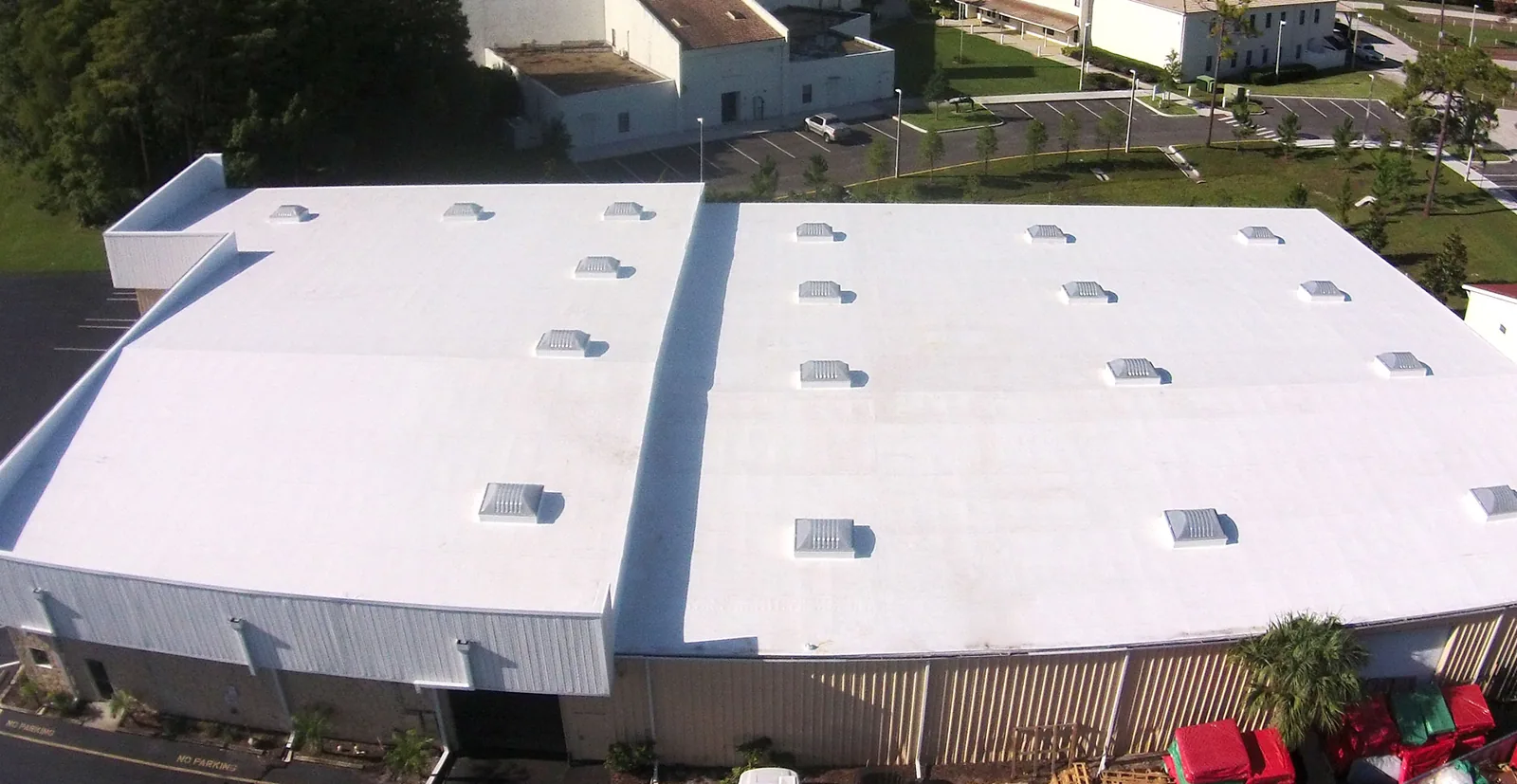
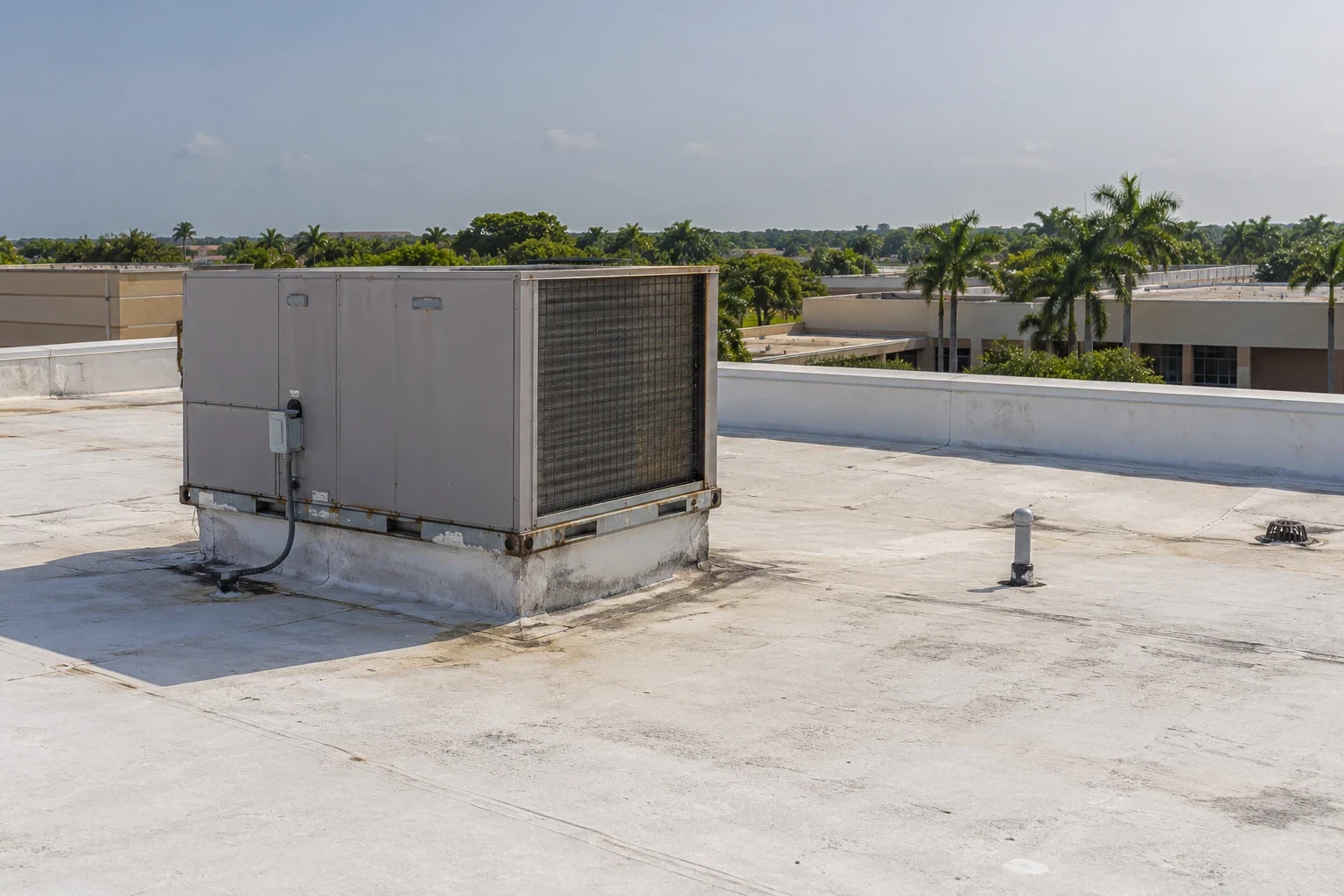
A localized split, puncture, failed curb flashing, or open seam may be repaired where surrounding materials remain serviceable. When evidence extends beyond one detail, we map affected roof planes and list tear-off, insulation, deck repairs, flashing, edge metal, drainage, equipment interfaces, and interior safeguards separately. This lets the operator see how kitchen access, exhaust shutdowns, and service continuity influence scope and timing. A repair package can be compared with a defined replacement option using the same operating limits.
A recover is considered only after checking existing layers, moisture, deck, attachment, slope, edge height, drainage, and code provisions. Added assembly height may alter exhaust curb elevations, grease duct clearance, wall transitions, or drain bowls. If one opening finds wet insulation, that evidence stays with the tested area unless more sampling supports a broader extent. We identify the unresolved item and the approval needed before installation, not just the least disruptive option.
Hallandale Beach’s built environment includes hotels, shopping centers, apartments, and individual boutiques. Restaurants and retail centers are among Miramar’s commercial offerings. Those neighboring facts support a regional view of operating uses but do not establish the condition or schedule of a particular dining property. Each restaurant receives its own roof-area record, so its exhaust, drainage, and interior protection scope stays distinct from nearby assets.
Industries We Work With
Owners and operators in these fields rely on us to plan roof work around their buildings.
Coordinate healthcare roof work in Miami Gardens, FL around patient routes, critical rooms, equipment, infection controls, and documented approval windows.
Coordinate 3PL roof work in Miami Gardens, FL around dispatch cycles, dock access, inventory protection, equipment routes, and phased closeout.
Plan school district roof work in Miami Gardens, FL around student routes, athletic spaces, summer windows, classroom protection, and board approvals.
Coordinate portfolio roof work in Miami Gardens, FL with area records, access windows, repair priorities, and approvals that keep each asset distinct.
Related Roofing Work
Other pages that cover the same roof question.
Roof leaking now? Call 555-555-5555 and we will send a crew to look at it.
What should installation and closeout include?
For a restaurant, define the roof build-up against its deck, slope, insulation, attachment method, fire criteria, wind design, and bid documents before approval. For a restaurant in Miami-Dade or Broward, the High Velocity Hurricane Zone requirements depend on the permitted assembly and building configuration. Resolve those details before setting the bid scope. A PVC system, TPO, or other compatible option is evaluated with curb, drain, edge, and penetration details. Restaurant use does not determine the membrane; field conditions and submittal review do.
Our sequence releases one dining or kitchen-adjacent roof zone at a time, with a dry-in and closeout point before the next service window. A restaurant work sheet records exhaust handling, any needed equipment isolation, lift and material paths, debris control, temporary drainage, interior safeguards, and the person authorized to approve a change after a concealed condition is found. A phased occupied-building sequence may keep dining or food preparation open outside the active work zone when the manager accepts the protection and access plan.
Closeout records completed areas, installed materials, photos, curb and seam checks, drain work, approved changes, and follow-up items. Before a kitchen vendor returns, we note access paths and any roof detail that needs inspection after service. A maintenance plan can include drain clearing and review of penetrations and exposed seams. Send roof plans, kitchen service windows, equipment layouts, leak history, and delivery limits for a field review. We will return a work package with operating boundaries and approvals. The handoff names the roof areas closed each day and any item still awaiting review.
Plan the restaurant roof window
Send roof plans, exhaust layouts, operating hours, equipment records, and delivery limits. We will map roof areas and trade interfaces for a field review that fits the approved access window.
Questions About Restaurant Roofing
Can the kitchen remain open during roof repairs?
The active roof area, interior protection, exhaust operation, and access plan determine whether kitchen work can continue. We set the boundary with the operator and identify any vendor approval before opening the assembly.
How are grease duct and exhaust details checked?
We inspect the curb, flashing, clearances, supports, surface condition, and service access around each termination. The roofing scope records any trade work needed before the final membrane detail is closed.
Does a ceiling stain identify the roof leak?
It gives us a place to investigate, but water may travel before showing inside. We trace the roof area, drainage, and nearby penetrations, then recommend testing if concealed conditions could change the scope.
Can work be scheduled before opening hours?
Some phases can fit an early access window if crew access, weather, deliveries, and safe closure support it. We record the agreed hours and daily return-to-service point in the work plan.
What should an owner send before the site review?
Provide roof plans, exhaust and equipment layouts, vendor contacts, service hours, repair history, and delivery rules. Those inputs help set inspection access, temporary protection, and trade handoffs.