Commercial Heat and UV Roof Damage Repair in Miami Gardens, FL
Roof Damage Repair
Plan commercial heat and UV roof repairs in Miami Gardens with close review of membrane, seams, drainage, and long-term capital priorities.
Commercial Heat and UV Roof Damage Repair Overview
Heat-related roof concerns rarely have one useful answer across an entire building. A faded field, a lifted seam, and a brittle curb flashing may look related from the parking lot, yet each can have a different cause and repair boundary. We map observations by roof area, identify which details still control water, and compare the inspection with leak calls and earlier work orders. That gives an owner a practical choice among targeted maintenance, a defined repair, a compatible coating, or replacement planning.
For a Miami Gardens property, the review also accounts for how the roof is used below. Operating hours, equipment, access points, and delivery activity influence where a crew can stage and how much surface should be exposed in one shift. The resulting record separates verified conditions from questions that require testing, so a capital discussion starts with a clear scope instead of assumptions based on surface color.
What does South Florida heat change on a roof?
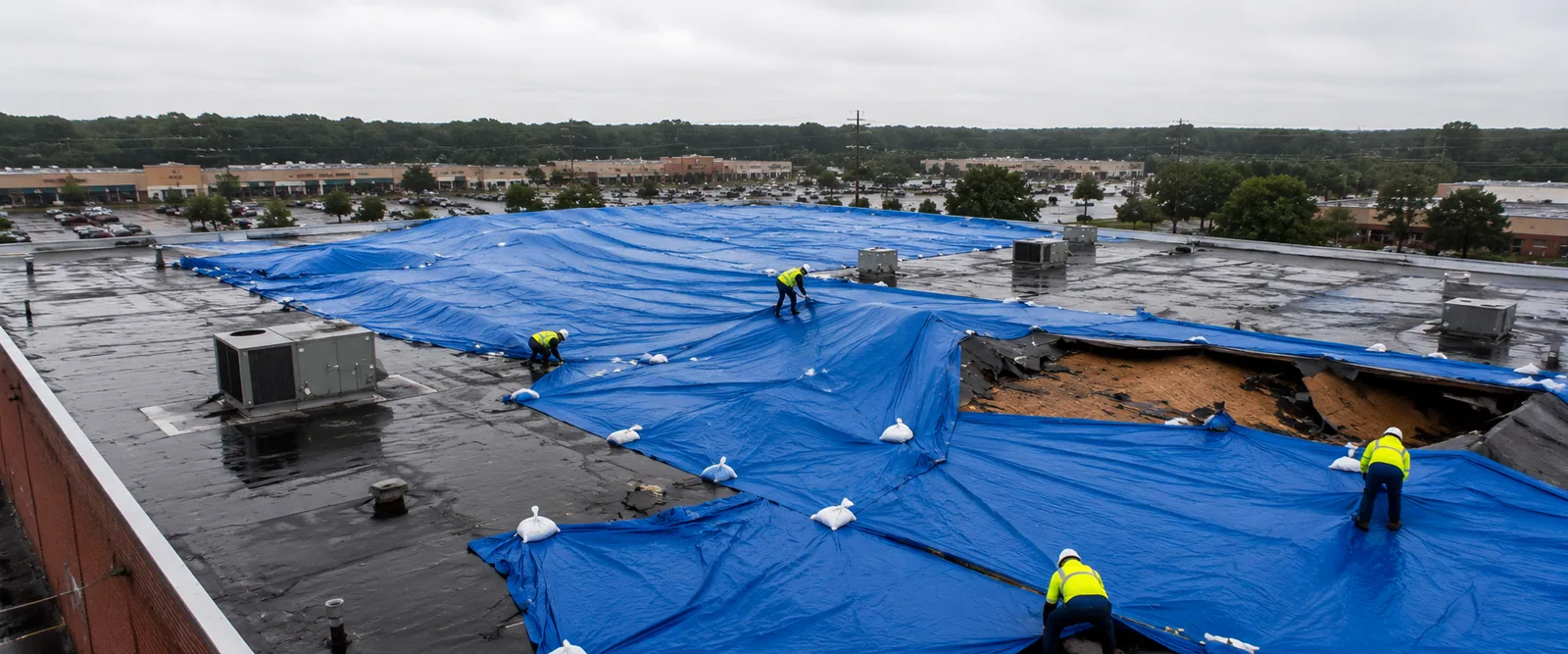
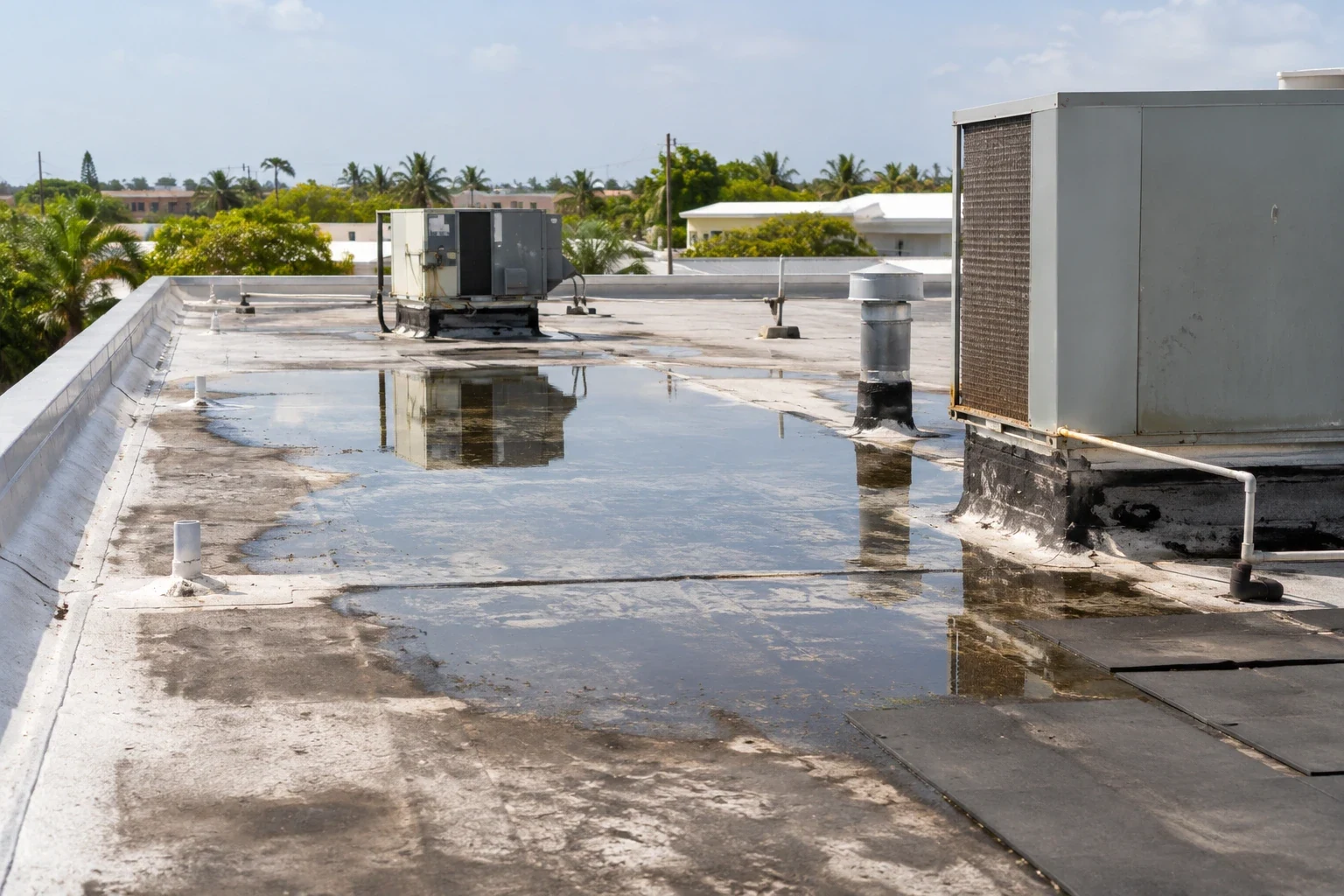
South Florida heat and seasonal moisture create a demanding cycle for roof assemblies. Repeated warming can move dissimilar materials at transitions, while ultraviolet exposure gradually changes some membranes, mastics, and exposed coatings. Those effects are not proof of failure. The inspection asks whether a seam, curb, penetration, or perimeter still forms a continuous water-shedding detail. We note cracking, loss of flexibility, edge lift, exposed reinforcement, and changes around fasteners, then compare those signs with interior reports and the history of prior repairs.
Near the Palmetto Expressway and U.S. 441, conditions across a large roof can vary with orientation, shade, drainage, and equipment density. Rather than treat the whole surface as one uniform system, we mark where heat exposure and water movement meet, where rooftop equipment interrupts the field, and where an earlier patch may have changed the assembly. For a portfolio spanning Hialeah and Miami Lakes, we keep these observations attached to each property instead of transferring an assumption from one roof to another. The Miami Gardens commercial roof assessment can organize observations by area and access sequence. That helps a facility contact review the work without interrupting every operation at once.
More on Commercial Heat and UV Roof Damage Repair
The sections below cover the questions property teams ask before they approve the work.
Which details show the roof is losing continuity?
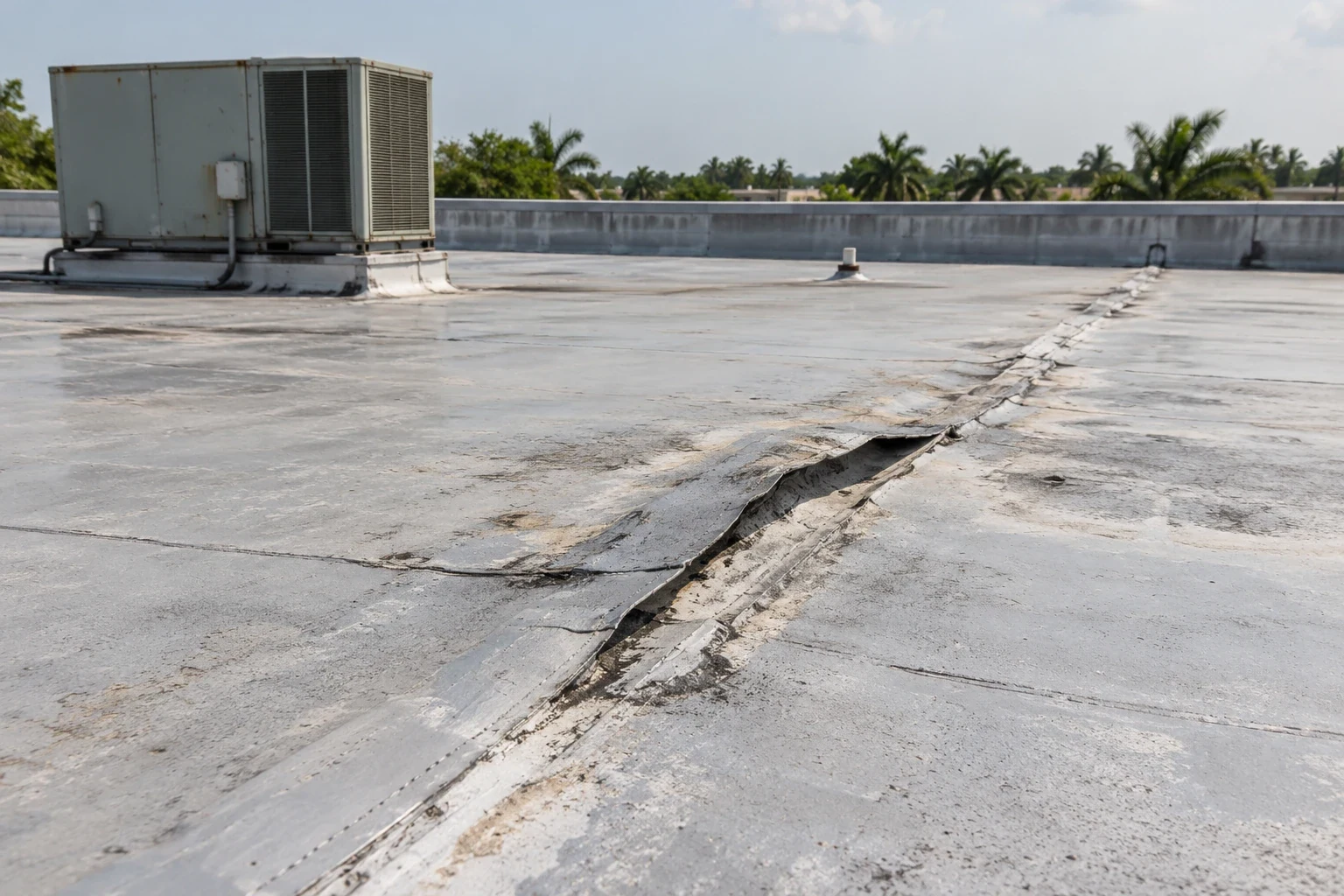
Useful warning signs are specific to the detail. At a lap, we look for separation, an incomplete weld, loss of bond, or a wrinkle that creates a channel. At a penetration, the questions are whether the boot or curb flashing remains attached and whether sealant is masking a larger gap. Along a parapet, movement can open a termination or stress a corner. A roof condition report records the location, extent, photographs, and confidence level for each observation. It keeps a visible blemish separate from a defect that has a demonstrated path for water.
Assembly identification matters before selecting a repair. On TPO roofing, field seams and welded accessories need a compatible inspection and repair approach; with an EPDM assembly, adhesive, tape, and edge details call for different checks. Existing coating, cover boards, and underlying insulation can also affect what is safe to bond. A commercial roof inspection may include moisture testing when the assembly and conditions make the results meaningful. Any scan is correlated with visual findings and confirmatory openings before the repair boundary is approved.
When can maintenance or coating extend service?
Maintenance is a sensible candidate when the roof remains functional and the work can address a bounded issue: clearing a drain, renewing a failed termination, correcting a loose accessory, or sealing a confirmed opening with a compatible detail. A coating discussion begins later in the process. The team first checks substrate condition, moisture, adhesion, preparation needs, and compatibility with the existing system. If wet material or unstable attachment remains, a surface layer can conceal the problem without correcting it.
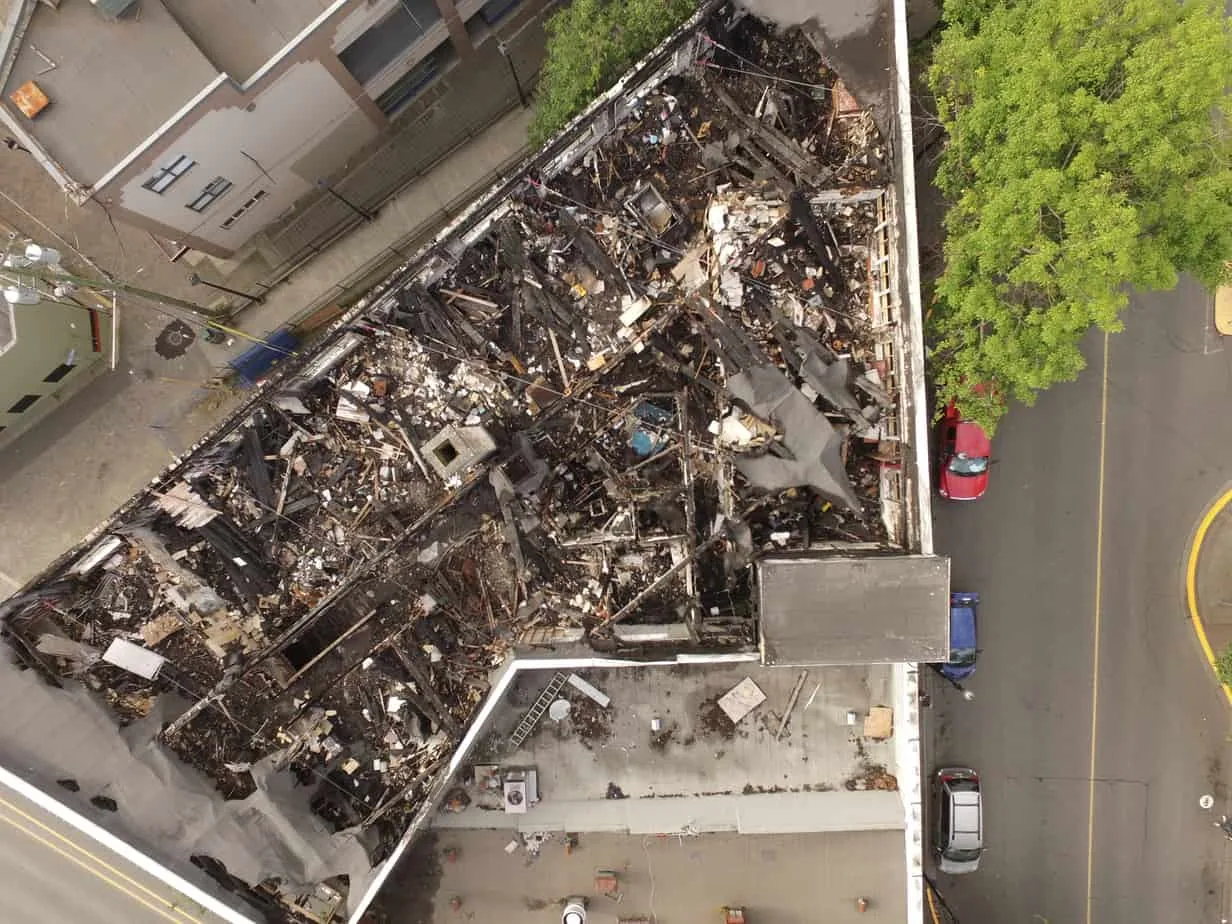
Broader replacement planning deserves attention when defects recur in separate areas, repair quantities keep expanding, or testing shows that deterioration extends below the membrane. We compare the repair limit with the roof’s observed condition and disclose what additional test could change the recommendation. A seam repair evaluation may resolve one isolated opening; multiple failed transitions can justify studying a larger section. The owner receives options with distinct boundaries, assumptions, access needs, and consequences, rather than a single presumption based on age alone.
Where coating remains viable, the scope should state surface preparation, detail reinforcement, application limits, and inspection points. It should also identify areas excluded because of moisture, incompatible material, or inadequate adhesion. This makes the decision reviewable and gives the maintenance team a checklist for future observations.
Industries We Work With
Owners and operators in these fields rely on us to plan roof work around their buildings.
Coordinate healthcare roof work in Miami Gardens, FL around patient routes, critical rooms, equipment, infection controls, and documented approval windows.
Coordinate 3PL roof work in Miami Gardens, FL around dispatch cycles, dock access, inventory protection, equipment routes, and phased closeout.
Plan school district roof work in Miami Gardens, FL around student routes, athletic spaces, summer windows, classroom protection, and board approvals.
Coordinate portfolio roof work in Miami Gardens, FL with area records, access windows, repair priorities, and approvals that keep each asset distinct.
Related Roofing Work
Other pages that cover the same roof question.
Roof leaking now? Call 555-555-5555 and we will send a crew to look at it.
How do weather and occupancy affect the work window?
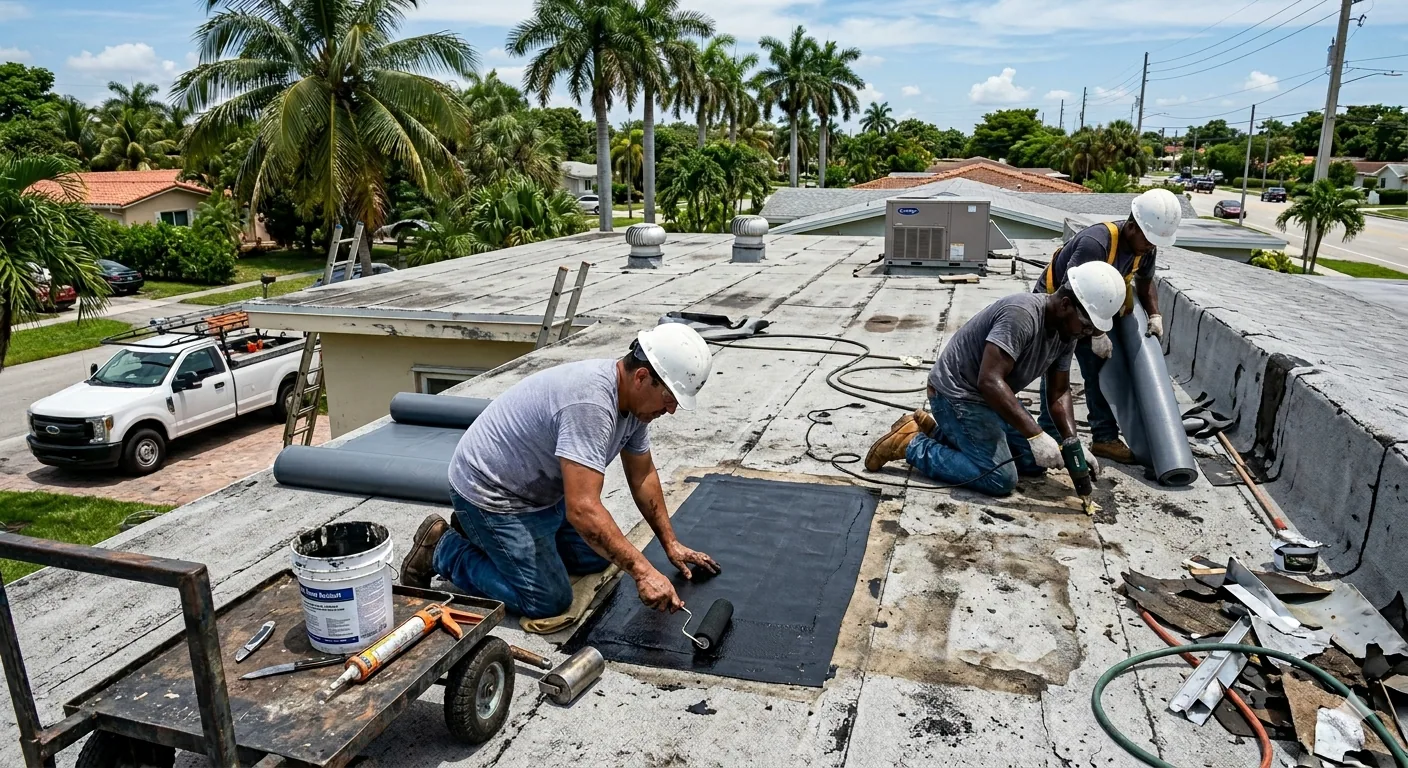
Miami Gardens sits within a region where the wet season typically spans May 15 through October 15 and brings a substantial share of annual rainfall. That regional pattern informs planning, but the daily forecast and the condition of the specific roof govern whether a crew can safely open an area. Before work begins, the sequence identifies a manageable work zone, the temporary protection method, the person authorized to release access, and the end-of-shift closure check. Each exposed area needs a defined path to completion or secure cover if weather changes.
Occupancy creates a second schedule. Retail, manufacturing, office, and service operations can have different noise limits, delivery windows, and restrictions on overhead work. We coordinate staging, lift locations, debris handling, interior protection, and routes that must stay clear. If the building remains active, the crew and site contact agree which rooms, equipment, or production lines require advance notice. Work can then be divided into practical sections instead of forcing a broad shutdown.
When several properties are involved, a general contractor may coordinate mobilization while keeping each roof’s observations, approvals, and closeout records separate. The plan notes access constraints and weather holds so that a later shift does not assume an area was completed when it was only temporarily protected. After rainfall, the team can revisit designated transitions and drainage points, compare new observations with the original map, and decide whether the next phase should proceed.
How should the owner compare the repair candidates?
Owners can compare candidates in a table that lists the observed condition, roof area, recommended action, access requirement, and what remains uncertain. Confirmed quantities stay separate from allowances. If testing is pending, the estimate states which result would alter the scope. Where multiple assembly types share one building, their boundaries and compatibility requirements remain visible. Roof-area capital tracking can carry these findings into a multi-year plan without treating every surface as the same age or condition.
Closeout should help the next inspection, not merely document that a crew visited. Photographs are tied to the roof map; completed repairs, materials, drainage observations, and excluded areas are recorded. A flashing condition review can rank details by urgency and access. A preventive maintenance program can then schedule routine cleaning and checks for the points that matter on that assembly.
The final record also notes which locations could not be reached and why. That detail prevents repeat mobilization and helps the owner arrange the correct lift, escort, or production window later. If a follow-up inspection is recommended after seasonal rain, the report identifies the locations and observations to compare. The decision remains grounded in roof-area evidence, with repair, coating, and replacement options kept distinct.
Compare heat-related roof options
Share the roof plans, system information, repair history, moisture reports, and occupancy schedule. We will map the affected details and compare maintenance, coating, repair, and replacement candidates by roof area.
Questions About Commercial Heat and UV Roof Damage Repair
Does discoloration mean a commercial roof has failed?
Not by itself. We inspect the affected surface and nearby details, then determine whether the change corresponds with loss of continuity, moisture, or another functional issue.
Can a coating correct heat-related damage?
It can be an option when the substrate is dry, stable, and compatible with the system. Preparation and repairs must be scoped before coating work begins.
How can I tell whether seams are opening from age?
We compare the seam condition across the roof, check adjacent flashings and attachment, and review prior repairs. The report maps confirmed defects separately from areas needing more testing.
Should repeated repair costs trigger replacement planning?
They are one input. We compare repair scope, moisture findings, remaining service condition, access needs, and capital timing before defining a replacement boundary.
Can roof work be scheduled during wet season?
Yes, with the work divided into safe access windows and a daily closeout plan. We use the current forecast to decide whether exposed areas can be opened and finished.