
Fire Damage Roof Repair in Miami Gardens, FL
Roof Damage Repair
Coordinate fire-damaged commercial roof repairs in Miami Gardens with a safe inspection, clear removal limits, and a documented reopening sequence.
Fire Damage Roof Repair Overview
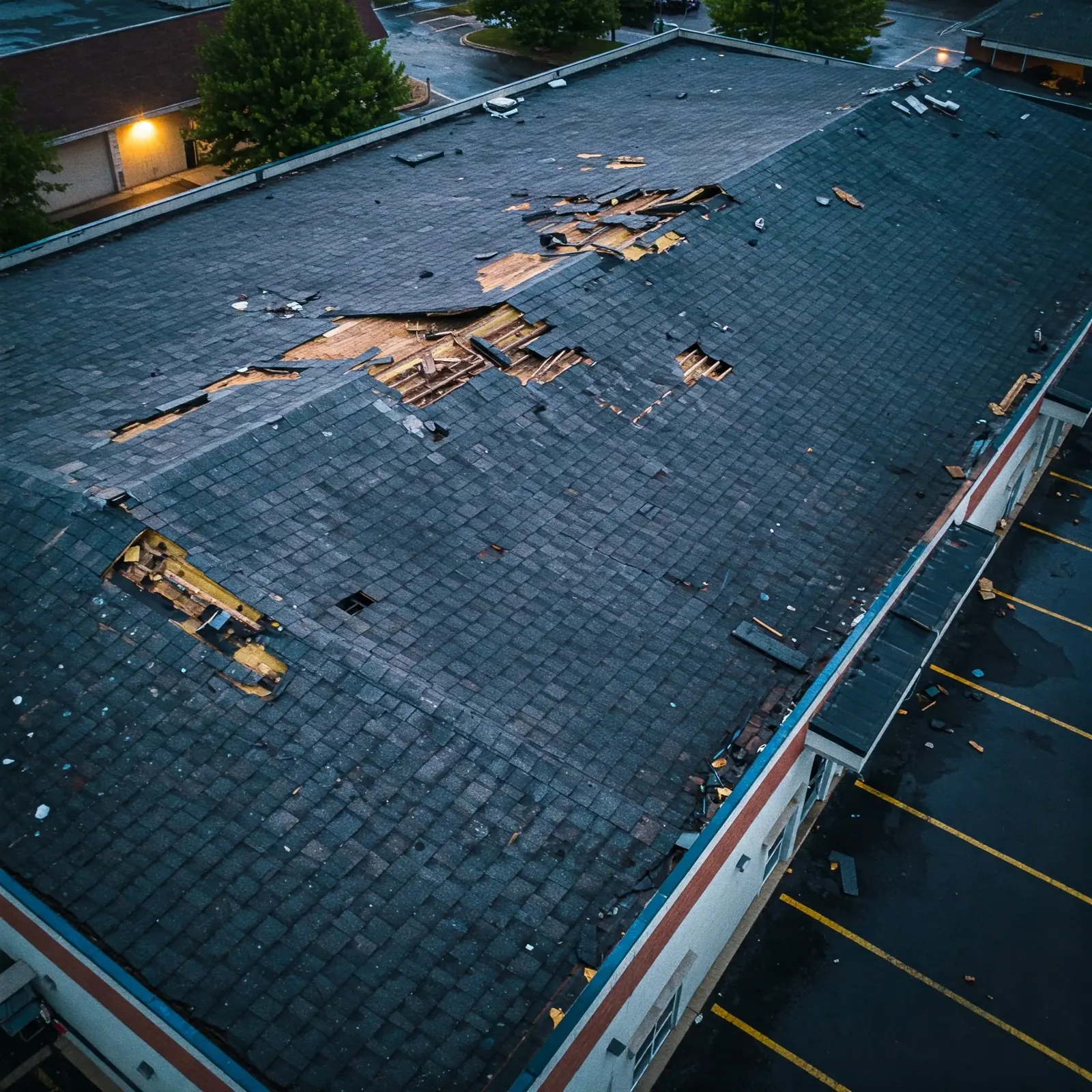
Fire damage changes the roof plan from routine repair to controlled stabilization and a documented assessment. For a commercial building in Miami Gardens, FL, we coordinate the inspection with the owner, fire authority, and design team so no one enters or opens an area before it is released. Smoke, heat, suppression water, and debris can affect different parts of the assembly, and the visible burn line may not show the full extent. The work package identifies what is safe to inspect, what must remain protected, and which decisions come before restoration.
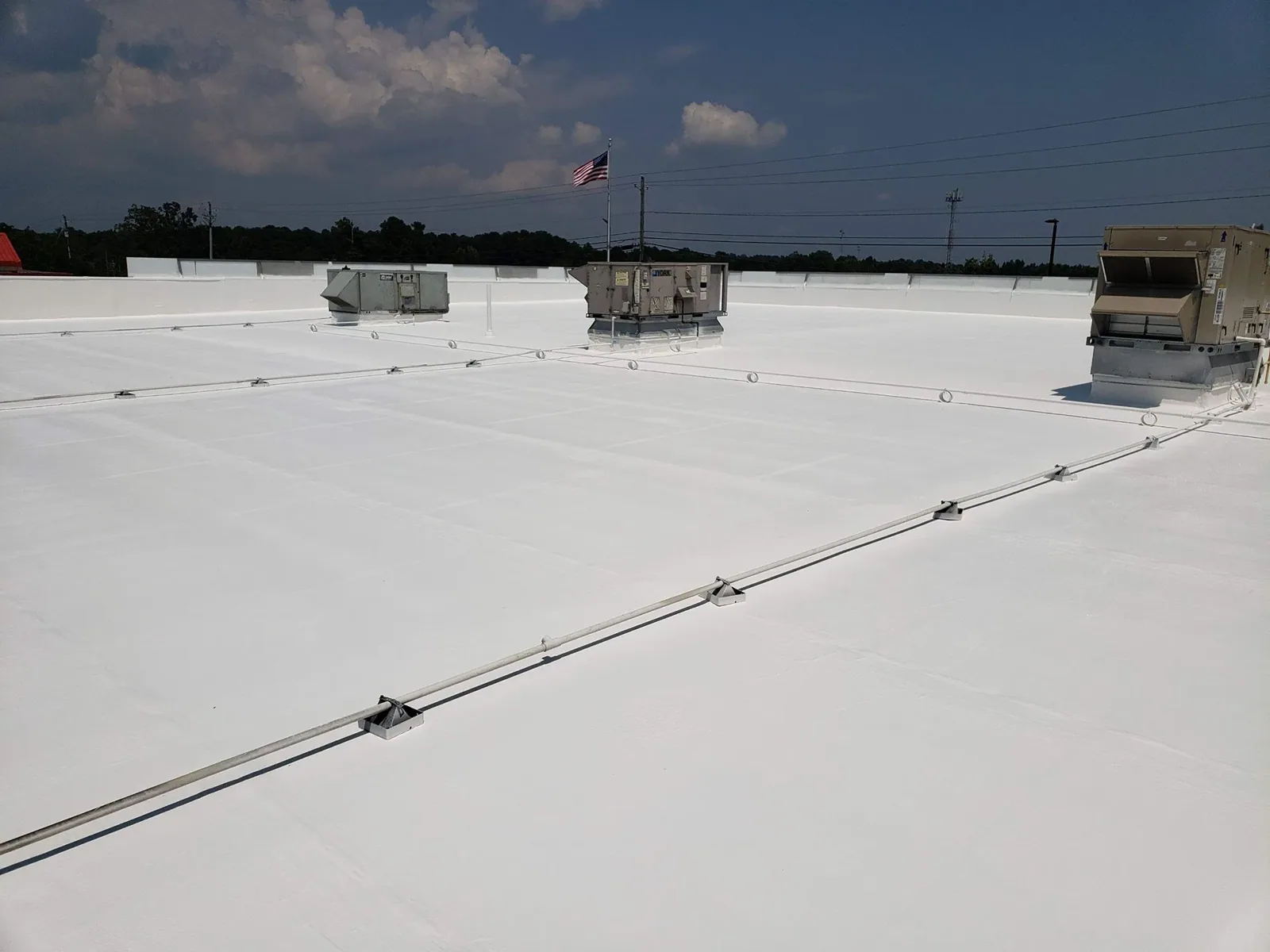
What should be secured before roof repair begins?
The responsible authority determines when the building and roof are safe to enter. We confirm access approval, hazards, utilities, and any structural restrictions before setting the inspection route. The facility representative identifies areas requiring a barrier, protected entry, or controlled equipment removal. We record who releases each zone and who can stop the work if conditions change. A round-the-clock emergency response can install temporary protection after the site is cleared, including during nights, weekends, and holidays.
Planning context across the area includes several land-use types, but fire recovery follows the affected building’s actual function and access limits. We map occupied rooms, essential equipment, and routes beneath the roof before defining a removal boundary. On a separate assignment in Hialeah or Miramar, those access notes stay in that property’s file; neither a route nor a safety release transfers across locations. The owner and responsible authority identify the conditions at the fire-affected property before crews enter.
More on Fire Damage Roof Repair
The sections below cover the questions property teams ask before they approve the work.
How do we separate heat damage from water intrusion?
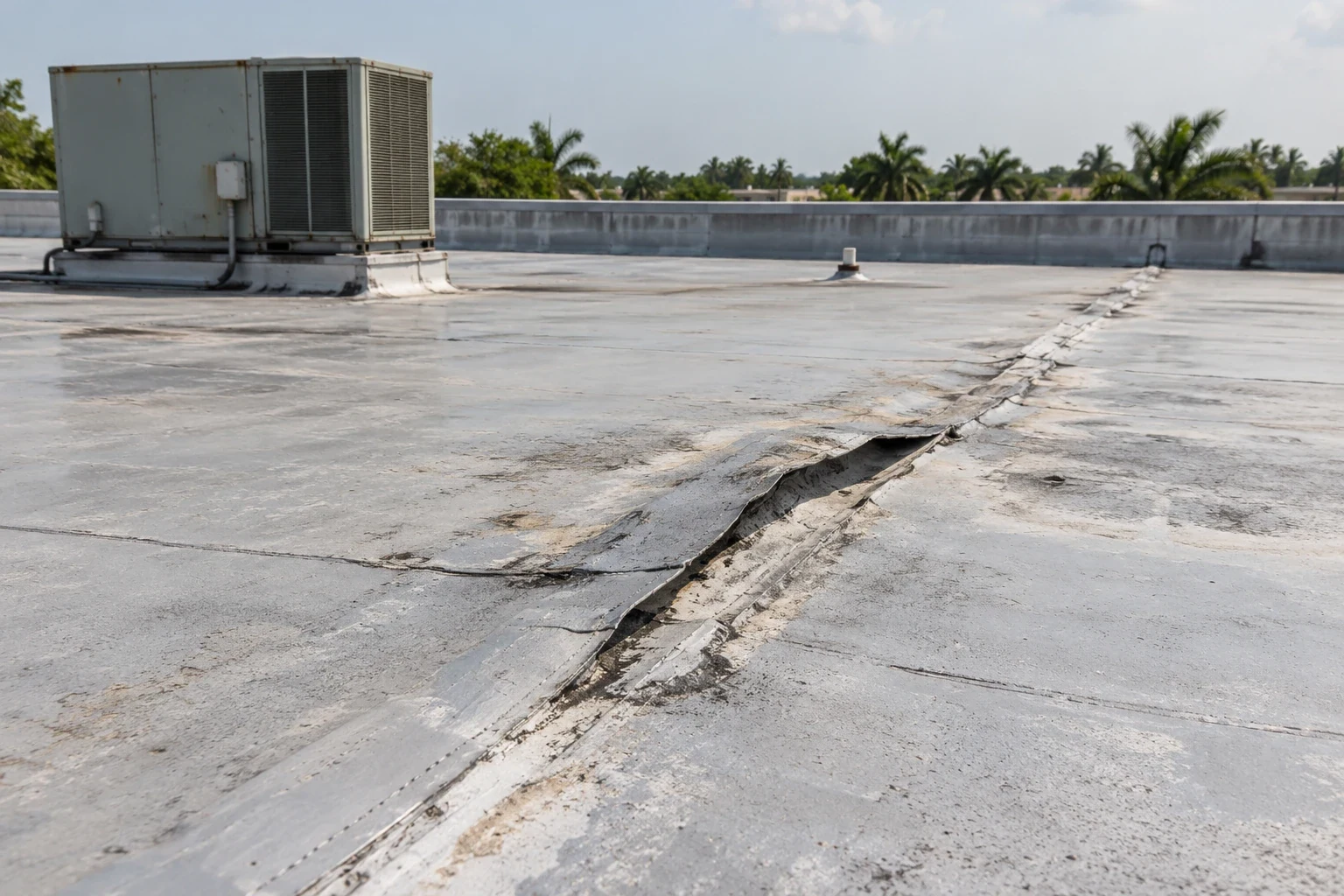
Heat can change membrane, metal, insulation, adhesives, and roof deck in different ways. We inspect the visible surface, seams, laps, flashing, edge details, and penetrations, then compare those findings with the area exposed to smoke or suppression water. The report marks what can be observed and which concealed materials need an approved opening. A photo-based condition report helps the owner distinguish the visible fire boundary from the removal area required to reach sound material.
Water from suppression can travel through drains, joints, and penetrations beyond the area exposed to flame. We check interior reports, drainage paths, and the condition of insulation and deck where access is approved. A commercial roof inspection can help plan the roof review, but a structural or fire-safety professional may need to release conditions before roofing work proceeds. We do not use an assumed burn radius to set a replacement limit; photographs, testing, and the responsible design review support that decision.
Which roof layers need evaluation?
The visible membrane is only one part of the assembly. We document its type, attachment, seams, flashings, insulation, cover board, and deck condition where inspection is authorized. A metal roof may need review of panels, clips, underlayment, and penetrations; a low-slope roof may require assessment of wet insulation and substrate beyond the damaged surface. A built-up roof system or TPO assembly calls for different replacement details, and the approved specification controls which components remain.
If removal reveals heat-affected deck or saturated insulation, we document the exact area and submit a proposed correction. The contractor and owner can then decide whether the adjacent roof should be tested, removed, or left in place. A membrane puncture assessment addresses a separate localized defect and should not be combined with fire removal unless the same area and evidence support both. That distinction keeps the scope traceable and helps the owner understand which costs arise from the fire condition, suppression water, or unrelated existing wear.
Industries We Work With
Owners and operators in these fields rely on us to plan roof work around their buildings.
Coordinate healthcare roof work in Miami Gardens, FL around patient routes, critical rooms, equipment, infection controls, and documented approval windows.
Coordinate 3PL roof work in Miami Gardens, FL around dispatch cycles, dock access, inventory protection, equipment routes, and phased closeout.
Plan school district roof work in Miami Gardens, FL around student routes, athletic spaces, summer windows, classroom protection, and board approvals.
Coordinate portfolio roof work in Miami Gardens, FL with area records, access windows, repair priorities, and approvals that keep each asset distinct.
Related Roofing Work
Other pages that cover the same roof question.
Roof leaking now? Call 555-555-5555 and we will send a crew to look at it.
How should temporary protection support reopening?
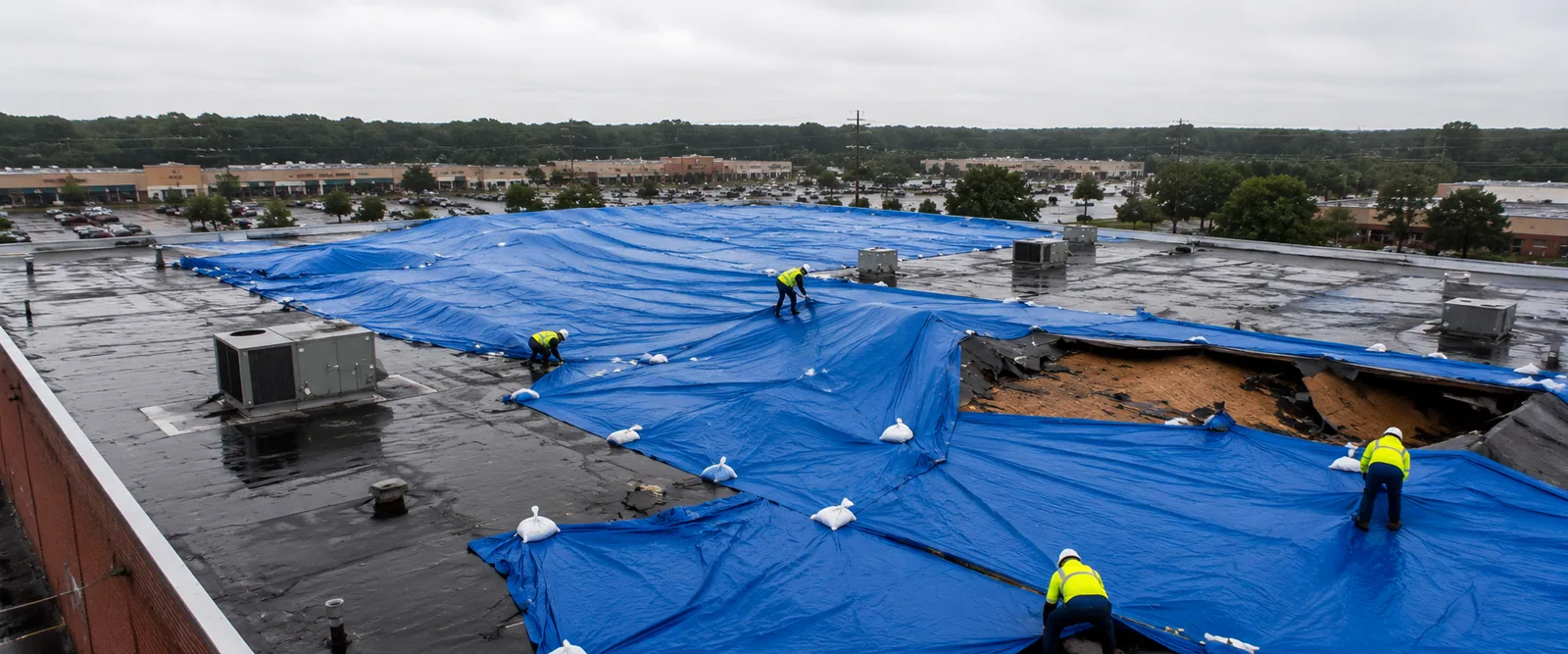
South Florida’s wetter stretch starts around mid-May and continues into October, but a seasonal average cannot tell a fire-repair crew whether a roof will remain dry during a particular shift. The current forecast and actual site condition set the work decision. We specify the exposed zone, the cover and fastening approach, the person who verifies it, and a stop-work trigger. If permanent installation cannot fit the approved window, the crew records the temporary state and checks it before leaving.
Reopening is a separate approval from roofing completion. The facility team confirms interior cleanup, equipment status, smoke remediation, and any required safety inspection before staff return to an affected area. We provide photographs of completed roof details, drainage checks, and remaining work limits so the owner can coordinate that release with the responsible professionals. If a later rain exposes a new symptom, the report shows which roof area was complete and which was still awaiting testing or permanent repair.
Before each shift, the project lead checks the approved access route, lift or crane position, material staging area, and the path used to remove damaged roofing. That sequence matters when a building remains partly operational or shares access with neighboring tenants. The owner can set quiet hours, delivery windows, and areas that must remain available for emergency vehicles. We record those conditions in the daily work plan, then update the map if a safety closure, test result, or change in weather shifts the permitted work zone. This gives the property team a clear basis for coordinating occupants without implying that roof repair itself authorizes building reentry.
What belongs in the fire repair closeout?
The estimate should identify the safe work zone, inspection results, materials to remove, repair boundary, temporary protection, and any design or authority approval still required. Cost and schedule can depend on testing, debris disposal, deck replacement, insulation depth, equipment coordination, and restricted access. We separate known quantities from allowances for concealed damage and state how a change will be documented. If a wind event also affected exposed edges, a wind damage review should remain a distinct finding unless field evidence supports combining the findings.
When a restoration program spans Miami Gardens and nearby markets, every structure keeps its own authorization trail. The file lists entry restrictions, approved survey zones, the debris route, and the person who released each step. This avoids transferring a building-clearance decision or insurance instruction across separate properties and preserves a direct link between the estimate and the inspected roof.
At closeout, retain dated photos, approved submittals, test results, completed-area maps, disposal records, change approvals, and follow-up items. A flashing repair may be part of the restoration where a transition was removed, while a warehouse roof plan may add equipment and inventory coordination. Each item is tied to its location and responsible approval. The facility manager can then compare the completed roof boundary with reopening records and carry outstanding work into a later capital package.
Coordinate a fire-damage roof review
Share the released access limits, roof plans, incident findings, and project schedule. We will map the inspection, temporary protection, removal boundary, and approvals needed for restoration.
Questions About Fire Damage Roof Repair
Can a roofing crew enter immediately after a fire?
No. The responsible authority must release the building and roof area first. We confirm access and safety restrictions with the site contact before inspecting or installing temporary protection.
Does a visible burn mark set the replacement boundary?
It identifies an area to inspect, not the full extent of affected materials. We document visible conditions and use approved testing and design review to define removal limits.
Can suppression water affect roof materials outside the burn area?
It can travel through drainage paths and openings. We compare interior reports with roof details and inspect accessible layers to identify where additional review is needed.
Who decides when staff can return to the building?
The facility owner and responsible safety or fire authorities control reentry. Our roof closeout records the completed work and remaining restrictions for their review.
How do you handle concealed damage discovered during tear-off?
We photograph and map the condition, secure the exposed area, and submit a proposed correction with its price and schedule effect for approval.