
Commercial Membrane Puncture Repair in Miami Gardens, FL
Roof Damage Repair
Review commercial membrane puncture repair in Miami Gardens. Document the opening, nearby seams, interior symptoms, and scope limits before work proceeds.
Commercial Membrane Puncture Repair Overview
A puncture is a break through the roof surface, but the opening alone does not describe the full repair. Its size, position, surrounding assembly, drainage, and what lies below it influence the response. A dropped tool, fastener, service activity, or loose debris may leave a mark, yet water intrusion still depends on how the opening connects to seams, insulation, and the deck. A suspected puncture should be documented with enough context to support a project-specific review for the Miami Gardens property. A defined commercial roof repair begins with the affected roof zone and the evidence available, not an assumed cause.
Separate the visible opening from the water source
Water inside a building may appear some distance from the roof entry point. It can move along a deck, insulation layer, curb, or framing before reaching a ceiling. Photograph the interior symptom and mark its location, then record any visible roof damage in relation to drains, laps, penetrations, and equipment. Do not infer that a puncture caused every nearby stain. A commercial roof inspection can map observed conditions and record inaccessible areas, while the written record should keep reported symptoms separate from confirmed roof-level findings.
During a review, record whether the opening has a clean edge, crushed or displaced material, a nearby fastener, or a path consistent with foot traffic. Do not enlarge or probe a surface without authorization and a suitable method. The reviewer can mark the point on a roof plan and take a wider photograph that shows surrounding features, then a closer image for scale. If interior water is still appearing, record its timing separately. That chronology may help the team compare weather, operations, and rooftop activity without treating correlation as a confirmed cause.
More on Commercial Membrane Puncture Repair
The sections below cover the questions property teams ask before they approve the work.
Identify the roof materials around the opening
Repair methods depend on the surface and underlying layers. A membrane, coated surface, metal panel, and built-up assembly each require compatible preparation and detailing. For a membrane roof such as TPO roofing, the reviewer should identify the product if records or field marks support it, then check seam proximity, surface condition, attachment, and any prior patches. A patch that bonds to the wrong material or bridges a moving joint can fail. If the assembly cannot be confirmed, state that limitation and identify the verification step before selecting a material.
Compatibility is more than matching a visible color or product family. A membrane patch needs a prepared surface and a detail that respects the existing seam, coating, or reinforcement. The installer should identify the approved method for that material and state what preparation is included. If a coating or prior patch obscures the original surface, the scope should explain how the reviewer will verify adhesion or handle an unsuitable area. Where records are incomplete, a limited test area may be considered with owner approval, provided the location and restoration step are recorded.
Look beyond the center of the puncture
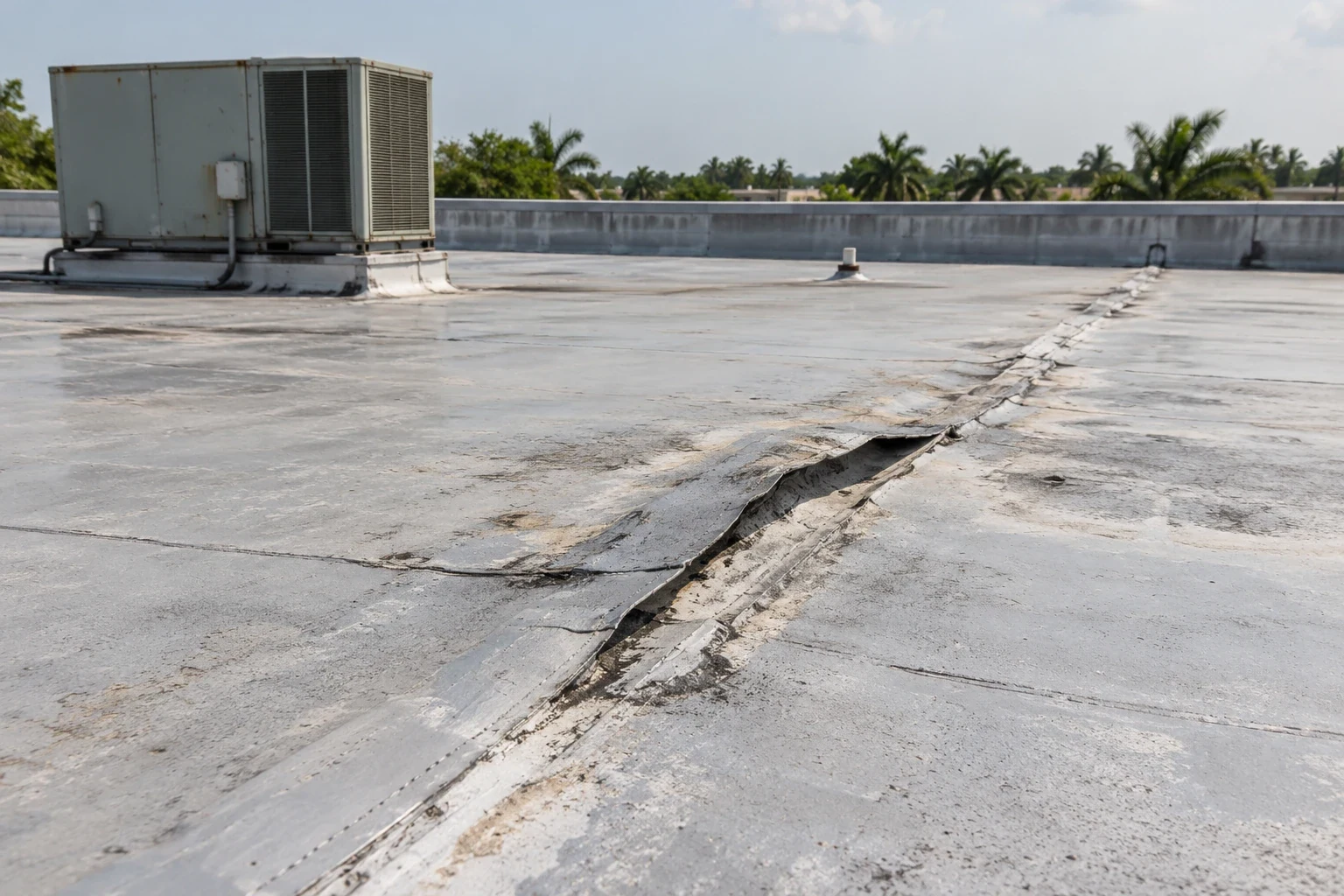
Examine the surrounding area for a lifted edge, split seam, crushed insulation, loose fastener, or other damage that changes the repair boundary. Check whether roof traffic, service work, or stored materials could have affected nearby surfaces. A puncture near a flashing transition may require review of the curb, termination, and adjacent field membrane, not only the small visible mark. A comparison with flashing failure repair can help distinguish a detail failure from a surface opening. Photographs should show scale and location, with suspected concealed damage marked for follow-up inspection.
Industries We Work With
Owners and operators in these fields rely on us to plan roof work around their buildings.
Coordinate healthcare roof work in Miami Gardens, FL around patient routes, critical rooms, equipment, infection controls, and documented approval windows.
Coordinate 3PL roof work in Miami Gardens, FL around dispatch cycles, dock access, inventory protection, equipment routes, and phased closeout.
Plan school district roof work in Miami Gardens, FL around student routes, athletic spaces, summer windows, classroom protection, and board approvals.
Coordinate portfolio roof work in Miami Gardens, FL with area records, access windows, repair priorities, and approvals that keep each asset distinct.
Related Roofing Work
Other pages that cover the same roof question.
Roof leaking now? Call 555-555-5555 and we will send a crew to look at it.
Protect the building while the condition is reviewed
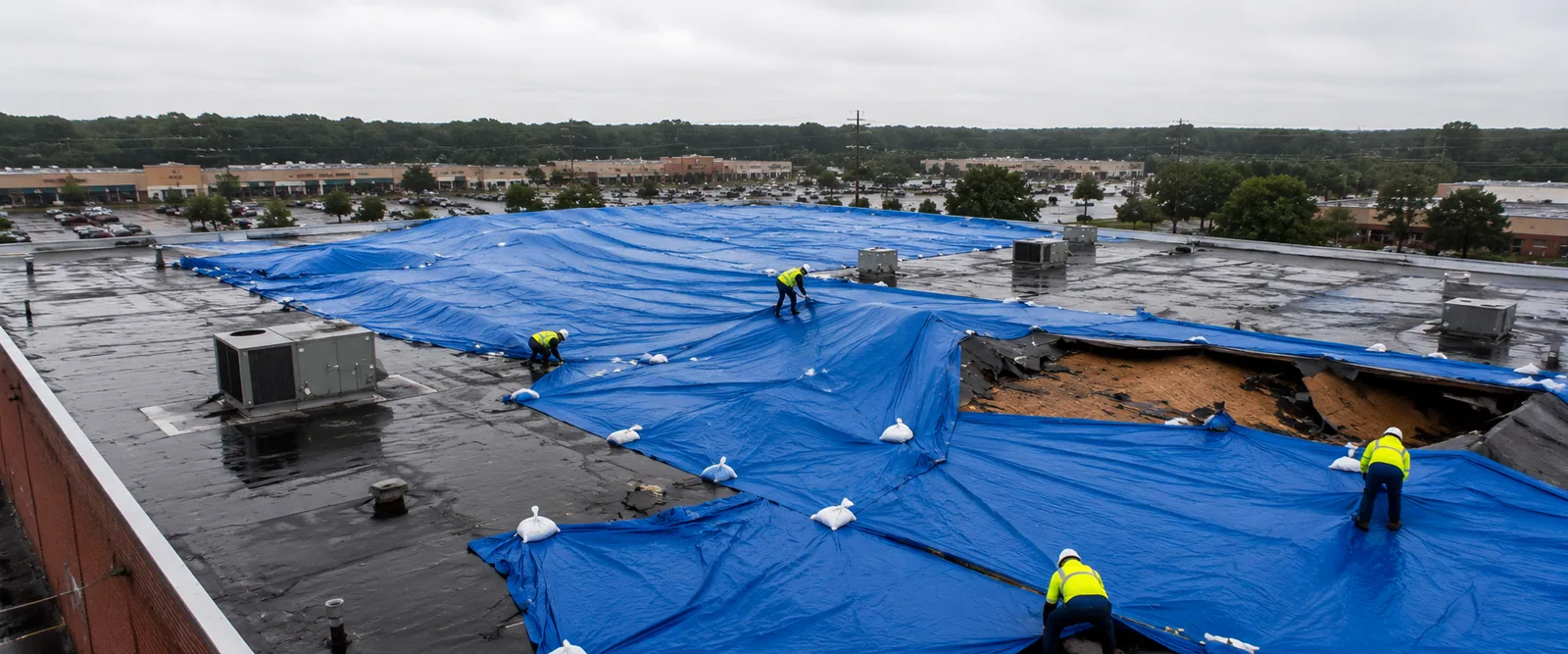
If water is entering, the property contact may need to arrange interior protection while a roof review is scheduled. State which rooms, inventory, equipment, and access routes are affected. Any temporary covering should have a defined area, method, duration, and limitation; it is not a permanent repair. For a report involving impact or a weather event, hail damage roof repair may help organize the observations, but cause and extent require evidence. Roof access, weather, fall protection, and safe material handling remain part of the work plan.
Write a repair boundary that can be checked
The proposal should identify the roof zone, material to be removed or prepared, patch dimensions or limits, compatible product, edge treatment, and included cleanup. It should say whether insulation, deck, adjacent seams, or interior protection are included. When opening the assembly is needed, explain how concealed conditions will be documented and who can approve added work. A useful scope distinguishes the initial repair from allowances for unknown damage. A repair scope should state the actual quantity, access method, and exclusions for this property.
Clarify whether the work includes removing wet or damaged material, drying a cavity, replacing insulation, or repairing the deck. These tasks should not be implied by the word patch. State who provides interior protection, how debris is collected, and what happens if rain interrupts the operation. If the repair depends on dry weather or a defined cure period, include that condition in the schedule. The owner should receive a written change request before an expanded area is repaired, with the added quantity and reason tied to what the crew found. For a puncture near a seam, define whether seam testing or re-welding is included, and show the patch edge in relation to the joint. Record the approved method before material preparation begins.
Use nearby city context without assuming identical sites
Commercial properties across Hialeah and Opa-locka include different business and land-use settings, so loading periods, customer access, production activity, and occupied rooms should be confirmed for the actual address. For a commercial property in Miami Gardens, confirm the roof access, operating hours, and requested repair before mobilization. Project teams should provide the street address, site contact, and access instructions before timing or availability is confirmed.
Keep the repair history tied to a roof zone
After work, save dated photos, the approved scope, product information, change approvals, and any closeout records with the building's roof plan. Mark where the repair occurred and whether adjacent areas were inspected or excluded. If the opening was sealed before the full assembly could be reviewed, preserve that limitation in the record. Later staff can then distinguish a completed patch from a recommendation that remained pending. Revisit the area after the next suitable inspection opportunity and compare the condition with the original observations without treating one dry interval as proof of long-term performance. Retain the closeout date, responsible contact, and any agreed follow-up interval.
For a repeated concern, compare the location with prior repairs and inspect adjacent transitions before closing the file. A marked sketch can show the original puncture, patch boundary, nearby equipment, and any area that could not be reviewed. Keep the report factual: list what was seen, what was performed, and what remains uncertain. If the building uses a maintenance log, enter the roof-zone identifier there as well. That cross-reference lets a future reviewer find the work without relying on staff memory of where the crew stood.
Document the opening before selecting a repair
Share the roof zone, visible condition, interior symptoms, access limits, and operating schedule for a focused review.
Questions About Commercial Membrane Puncture Repair
Does every roof puncture cause an interior leak?
No. The opening may not connect to the interior symptom, and water can enter elsewhere or travel before it becomes visible.
What information helps locate a suspected puncture?
Provide dated interior and roof photographs, the affected room or equipment, the roof-zone reference, and any recent rooftop service activity.
Can a patch be installed over any roof material?
No. Preparation and repair materials must suit the existing assembly and adjacent details, which should be identified before work proceeds.
Should the proposal include concealed damage?
It should explain how hidden conditions will be documented, priced, and approved if opening the roof reveals work beyond the visible puncture.